19/10/2026 19:17
Who Gets the Microphone? Telegram Voice-Chat Invitations for Cambodian Fabric Shops

A fabric shop can answer many buying questions without putting every customer on camera. An audio session can explain how to request a sample, what information a tailor needs, or why a quotation depends on the intended garment. But an invitation also sets expectations: is someone joining to listen, ask a question, or lead the conversation? For Cambodian businesses promoting a Telegram session, that distinction deserves attention before any SMM panel decision. This workflow focuses on inviting the right people into the right speaking roles, keeping the discussion useful, and turning unanswered questions into clear follow-up work.
1. Choose a question that works through audio
Start with a customer decision that can be explained aloud. Preparing a fabric enquiry is a good candidate because the host can describe what information to bring: intended use, approximate quantity, deadline and whether a physical sample is needed. Judging a subtle colour difference is a poor candidate. Listeners cannot reliably assess fabric appearance from a spoken description, and a confident presenter cannot remove that limitation.
In a hypothetical Phnom Penh fabric shop, the owner plans a short session about preparing for a school-uniform fabric enquiry. A local tailor is invited to explain which measurements and design details help the discussion. The shop handles stock questions separately. The promotional promise is therefore specific: listeners will learn how to prepare an enquiry. It does not promise that every participant will receive a final quotation or find a suitable fabric during the session.
2. Understand the invitation roles before sharing links
Telegram’s official voice-chat documentation describes separate speaker and listener invitation links for channels and public groups. Speaker links let invited guests enter with speaking access; listener links provide a different route for the audience. Telegram also documents a raise-hand function for muted participants who want to speak. These are participation controls, not evidence that the people joining are prospective customers.
Write down who belongs in each role. The invited tailor receives the speaker invitation privately, together with the topic and boundaries. Public promotion uses the listener invitation. A staff member manages questions while the owner hosts. Test the actual options available in the shop’s current app before announcing the session; interface wording can vary. If staff cannot establish the intended roles reliably, postpone public invitations until they can reproduce the setup.
3. Give the guest a brief that prevents accidental promises
A guest speaker needs more than a joining link. Send a compact brief stating the audience, working language, subject, planned duration and matters that require later checking. For a Cambodian shop, choose Khmer when that is the language the intended customers use, while retaining familiar product terms where helpful. Ask the speaker to explain specialist words rather than assuming every listener already works in tailoring.
Agree on who can answer commercial questions. A tailor may explain how garment design affects fabric requirements but should not announce the shop’s unconfirmed stock, discounts or delivery commitments. Give the host a simple intervention phrase: that detail needs checking against the specific fabric and quantity. If the guest sells related services or has a commercial relationship with the shop, explain that relationship clearly in the introduction. Listeners should understand whose advice they are hearing.
4. Write an invitation that answers practical questions
The public announcement should state the topic, date, Cambodia time, expected length, language and question process. Explain whether participants can simply listen and where they can send a question beforehand. Name the host and guest by their actual roles. Avoid describing a routine shop discussion as an exclusive expert event unless that description is accurate. Give people enough information to decide whether attending is worthwhile.
For the hypothetical uniform session, the announcement could explain that the discussion covers preparing a fabric enquiry and requesting samples, while individual measurements and prices will be handled privately afterward. Include the tested listener route when available. Keep the guest’s speaker invitation out of public graphics, forwarded announcements and team templates used for promotion. Before sharing, have another staff member read the announcement as a customer and identify anything that sounds like a booking or stock guarantee.
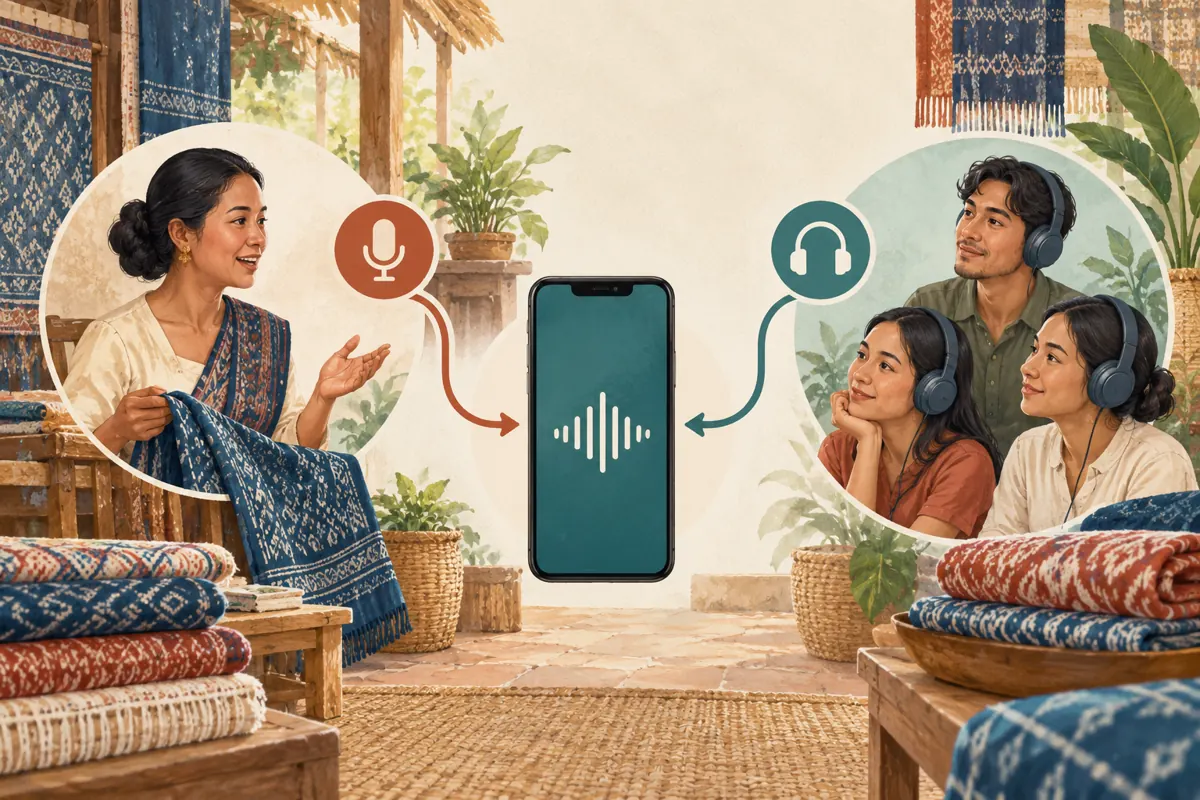
5. Rehearse joining, speaking and recovering from silence
Run a rehearsal with the host, guest and a colleague acting as a listener. Each person should use the invitation intended for that role. Confirm that the guest can be heard, the listener enters as expected, and the moderator knows how to handle a request to speak. Use headphones and separate devices sufficiently to avoid feedback. Test from the place where the host will actually sit, including ordinary shop noise.
Prepare for a guest disconnecting or a microphone failing. The owner should have a short explanation ready and a few relevant questions to discuss while the problem is checked. If the session cannot continue clearly, announce that the remaining answers will be provided later through the shop’s stated contact route. Do not leave listeners waiting without an explanation. A modest rehearsal also reveals whether the topic needs photographs or samples that an audio session cannot supply.
6. Moderate questions without turning the room into an order queue
Open with the purpose, the speaking process and the limits of the discussion. Ask participants to keep questions short and avoid reading telephone numbers, delivery addresses or other personal details aloud. The moderator should distinguish a general question from a private transaction. How to request a swatch belongs in the shared discussion; an individual customer’s payment dispute needs a separate conversation.
Keep a simple question list with three possible outcomes: answered, needs checking, or needs private follow-up. This is an editorial working note, not a customer database. Record only what the team needs to finish the response. When several people ask similar questions, combine the subject without exposing their identities. If a question moves beyond the guest’s experience, acknowledge the limit and assign a follow-up owner. Guessing a fabric specification to maintain momentum creates avoidable confusion later.
7. Decide about recording before people speak
Telegram documents administrator audio recording for voice chats, with the finished recording available in Saved Messages and an indicator during recording. Availability of a recording feature does not settle whether recording is appropriate for this event. Decide beforehand whether the shop needs a replay or whether a written summary would serve customers better.
If recording, explain the plan in the invitation and repeat it at the opening. Confirm that the guest agrees, and remind listeners before inviting questions aloud. Offer a way to submit a question without speaking in the recording. Review any replay before sharing it for accidental personal details, unsupported claims or answers that depended on temporary stock information. If those issues cannot be resolved cleanly, publish a checked written summary instead. Do not promise a replay until the team knows it can provide a useful version.

8. Assess SMM panel relevance without inventing a missing service
The supplied jkj-smm.com catalogue examples include “Telegram Members ~ 30 Days Non Drop ~ 50k/Days ~ Instant ~ 𝗥𝗘𝗙𝗜𝗟𝗟 30D”. Its title identifies a member-oriented offering. The supplied description is empty, so this article cannot verify the title’s speed, retention or refill wording. Nothing in that example establishes a service for relevant live listeners, guest speakers or moderated customer questions.
Ask what problem the team is actually trying to solve before considering an order. A missing speaker requires coordination with the guest. Confusing invitations require rewriting and testing. Too few suitable questions may require asking existing customers what they need explained. Purchased engagement is not evidence of genuine interest, sales, ad delivery or Cambodian users. Do not describe a member order as official Telegram advertising or use its delivery count to claim local attendance. If the documented offering does not address a legitimate need, skip the order.
9. Review what customers understood after the session
Afterward, prepare a concise answer sheet covering the most useful questions, remaining uncertainties and next steps. For the hypothetical uniform discussion, that might explain what to include in a sample request and which matters require the tailor to inspect the design. Check technical statements with the person responsible before publishing. Make the summary understandable to someone who did not attend.
Evaluate the discussion through observable work: whether the planned questions were answered, whether anyone reported joining difficulties, and whether unresolved enquiries received a response. A later sample request is a separate event that can be recorded when it actually occurs. It does not prove that every listener was interested in buying. If panel work happened around the same period, keep its order and delivery record separate from session notes. Explain uncertainty instead of assigning every subsequent enquiry to the promotion.
10. Fix the failure before repeating the event
Common mistakes point to different remedies. Sharing the speaker invitation publicly is an access-planning error; correct the invitation route and review the available moderation controls. Frequent interruptions suggest that the opening instructions or question handling need improvement. Repeated requests to see the fabric mean the topic may need a visual demonstration or an in-shop sample appointment. None of these problems is solved merely by making a counter larger.
Choose the next action from the evidence. Repeat the audio format when it helped explain a verbal process and the team can answer the remaining questions responsibly. Change format when customers need to inspect material characteristics. Pause when staff lack time to finish follow-up. A useful promotion leaves people better prepared to make a decision. That is a stronger basis for planning the next session than presenting attendance, reactions or catalogue delivery as customer approval.

Frequently asked questions
Should every customer receive the speaker link?
For a hosted Q&A, use the listener route for general invitations and reserve the speaker route for agreed contributors. This gives the moderator a manageable starting point. Customers can still be invited to ask questions through the process explained at the opening. A speaker invitation should reflect a role in the event, not a reward for showing interest.
Can a Telegram member service supply customers for the audio session?
The supplied member-service example does not establish that capability. Membership, live participation, local relevance and purchase intent are different things. Do not infer one from another or describe delivered members as Cambodian shoppers. For suitable questions, invite people through existing, appropriate customer contact routes and explain the session’s practical value.
What if someone asks for a final price while speaking?
Explain which details are still needed, such as the fabric reference, quantity or intended use, and direct the enquiry to the shop’s normal private quotation process. Do not ask the customer to disclose sensitive details aloud. Record the unresolved subject and who will handle it, without treating a public question as a confirmed order.
Is an audio replay always better than a written summary?
No. A summary may be easier to consult when the useful outcome is a short preparation list. A replay can preserve a detailed explanation, but it may also contain personal disclosures, interruptions or temporary information. Choose the format that remains clear and accurate after review, and obtain the necessary agreement before sharing recorded contributions.
What should the shop do if nobody asks a question?
Use the genuine recurring questions prepared beforehand, identifying them as common shop enquiries rather than pretending they came from live listeners. End at the announced time and offer a clear follow-up route. Silence alone does not establish satisfaction or disinterest; review the topic, invitation clarity and opportunity to submit questions before planning another session.
Explore the current service catalogue, create an account, or ask a specific question through support tickets.
Prepared with AI assistance. Illustrations explain the workflow and do not represent customer results.