21/10/2026 08:00
Is That Offer Still Live? YouTube Chat Replay for Cambodian Aquarium Shops

An aquarium filter demonstration can remain useful long after the livestream ends. The conversation beside it may age much faster. A message about an available spare part, a collection arrangement or a temporary bundle can confuse someone watching later. For Cambodian aquarium shops, reviewing that conversation should come before sharing the recording again or considering any promotion service. This guide explains how to assess YouTube live chat replay, distinguish it from information inside the recording, and give new viewers a clear enquiry route. The shop situations below are hypothetical examples, not customer results or evidence of promotional performance.
1. Decide what the archive should help buyers understand
Start with one purpose for the recording. A useful archive might show how a filter basket lifts out, which fittings come in the box, or where to find a model label. Write that purpose in a sentence before reviewing chat. If the main value was a temporary sales event, the recording may need a different introduction or a replacement demonstration before it becomes suitable for ongoing promotion.
In a hypothetical Phnom Penh shop, a presenter demonstrates a filter while a colleague answers collection questions. Days later, the shop wants to share the recording as a product guide. The demonstration still explains the equipment, but a chat message saying that collection is available that evening no longer describes the current arrangement. The review must therefore consider both what viewers learn and what they might mistakenly expect.
2. Understand what replay preserves
YouTube describes live chat replay as the conversation playing alongside an archived stream as it appeared during the broadcast. Replay is enabled by default. After the event, new comments appear below the video rather than continuing the original live conversation. These distinctions are documented in YouTube Help’s Moderate live chat page, listed in Sources.
Treat the old conversation as dated context. A viewer asking whether tubing is included does not establish that tubing belongs in every package. Likewise, the presenter saying that a particular customer can collect an item does not establish a general collection policy. When reviewing an exchange, read the question and answer together. Short replies such as “yes,” “available” or “that one” can become ambiguous when the product being discussed is no longer obvious.
3. Audit three places where an old offer can survive
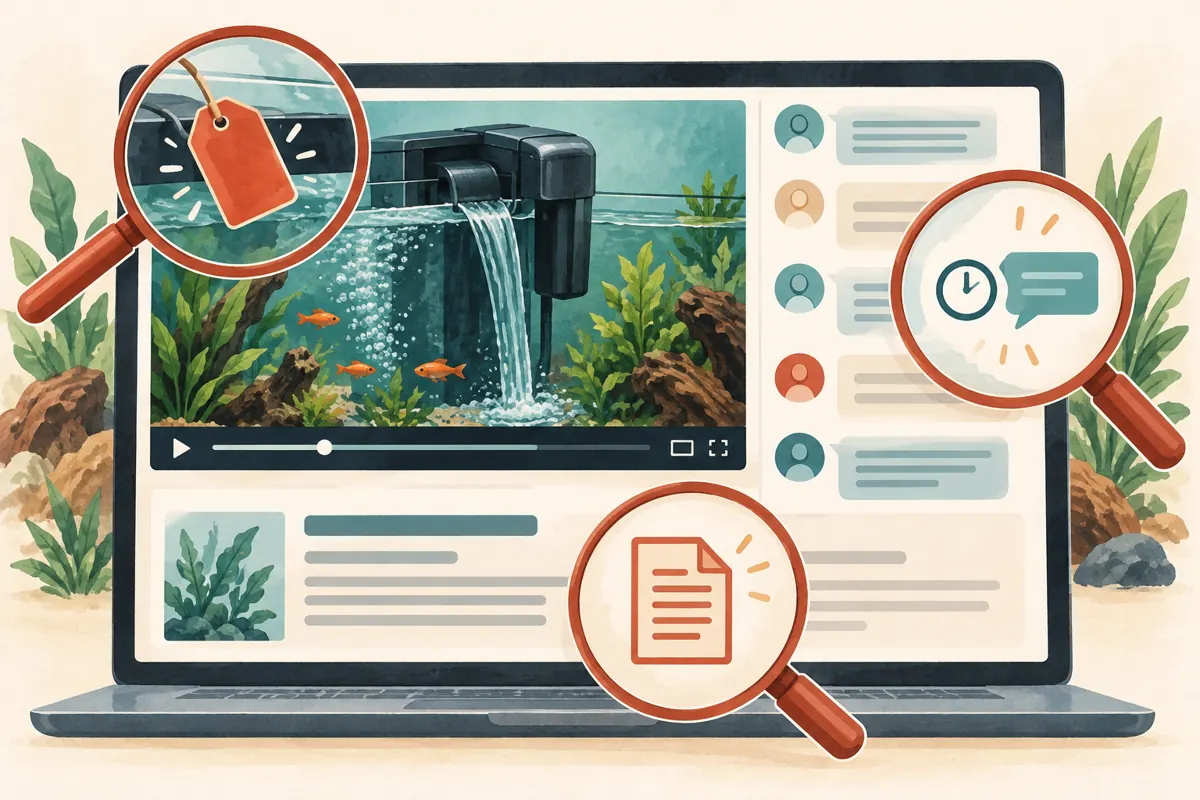
Review the recording, the replayed chat and the surrounding written information separately. In the recording, listen for prices, availability statements and spoken promises. Watch for offer cards, product labels and any chat captured inside the video picture. In replayed chat, look for temporary arrangements or answers that apply only to one model. Then examine the title and description for language that still presents the event as current.
Use a short review note containing the location, the statement, why it matters and the proposed action. A hypothetical entry could read: “Chat beside the tubing demonstration: collection offered that evening; expired arrangement; decide whether replay remains useful.” Another might identify an outdated bundle card visible on camera. Keeping these entries separate prevents the team from assuming that one setting change has corrected every version of the message.
4. Choose whether chat replay adds useful context
Keep replay when the conversation helps viewers understand the demonstration and its dated context remains clear. Consider switching it off when fleeting offers dominate, replies are difficult to interpret, or the discussion distracts from the archive’s purpose. Do not use this choice to conceal legitimate complaints while presenting the recording as proof of universal satisfaction. The editorial question is whether the remaining presentation is accurate and understandable.
YouTube’s documented route is to open your videos, choose the Live tab, select the recording, open Customization and deselect Live chat replay. Verify the result on the watch page after applying the change. This affects the separate replay feature; text already captured inside the recorded picture remains part of that picture. If an expired offer is spoken or visible in the footage, address the recording itself before promoting it again.
5. Consider the consequence before editing the recording
YouTube states that livestreams edited in its video editor will not have chat replay, and that this applies to all edit functions. Plan around that consequence before changing an archive. A seemingly small edit can therefore affect how viewers understand exchanges elsewhere in the recording. The supporting guidance is YouTube Help’s Learn about Live Chat page in Sources.
For the hypothetical aquarium shop, removing an opening offer segment could leave later answers such as “the smaller one shown earlier” without enough context. Review the intended result as a complete guide, not merely a recording with one troublesome passage removed. If the useful explanation depends heavily on the original conversation, a fresh demonstration may be clearer. Keep an internal copy of the review notes so the person preparing the replacement knows which questions need explicit answers.
6. Give the archive a current, specific enquiry route
Prepare a brief description note that states the recording’s purpose and directs buyers to current information. A hypothetical English draft is: “Archived filter demonstration. Package contents and collection arrangements may have changed since filming. Send the model name and the part you need through our current shop contact channel before travelling.” Have a fluent colleague prepare Khmer wording if that is what the shop’s customers use. Preserve model names exactly.
Make the next step manageable for staff. For a replacement fitting enquiry, ask initially for the model label and a clear photograph of the existing connection. For collection, confirm the relevant branch and availability before giving travel instructions. Avoid asking people to put phone numbers, home addresses or payment details in public comments. A useful archive should reduce uncertainty without turning its public discussion into an order-processing system.
7. Separate SMM service labels from archive improvements
The supplied jkj-smm.com catalogue includes the exact title “🎥 YouTube - Live Concurrent Views - Stable Views ~ 30 min ~ INSTANT”. Its wording identifies a live concurrent-view offering; the supplied description is empty. There is no supporting description here establishing delivery method, audience location, viewer authenticity or suitability for an archived recording. The title provides no basis for assuming that the service manages replay, answers questions or corrects outdated information.
YouTube prohibits artificial engagement, including knowingly inflating live traffic, and explains that a hired promoter’s actions can affect the channel. Review the method against its Fake engagement policy before considering a service, and decline methods that violate it. Purchased engagement is not evidence of genuine interest, sales, ad delivery or Cambodian viewers. A service label also does not establish official platform affiliation. Archive quality and policy compliance remain separate responsibilities.
8. Make future demonstrations understandable without chat
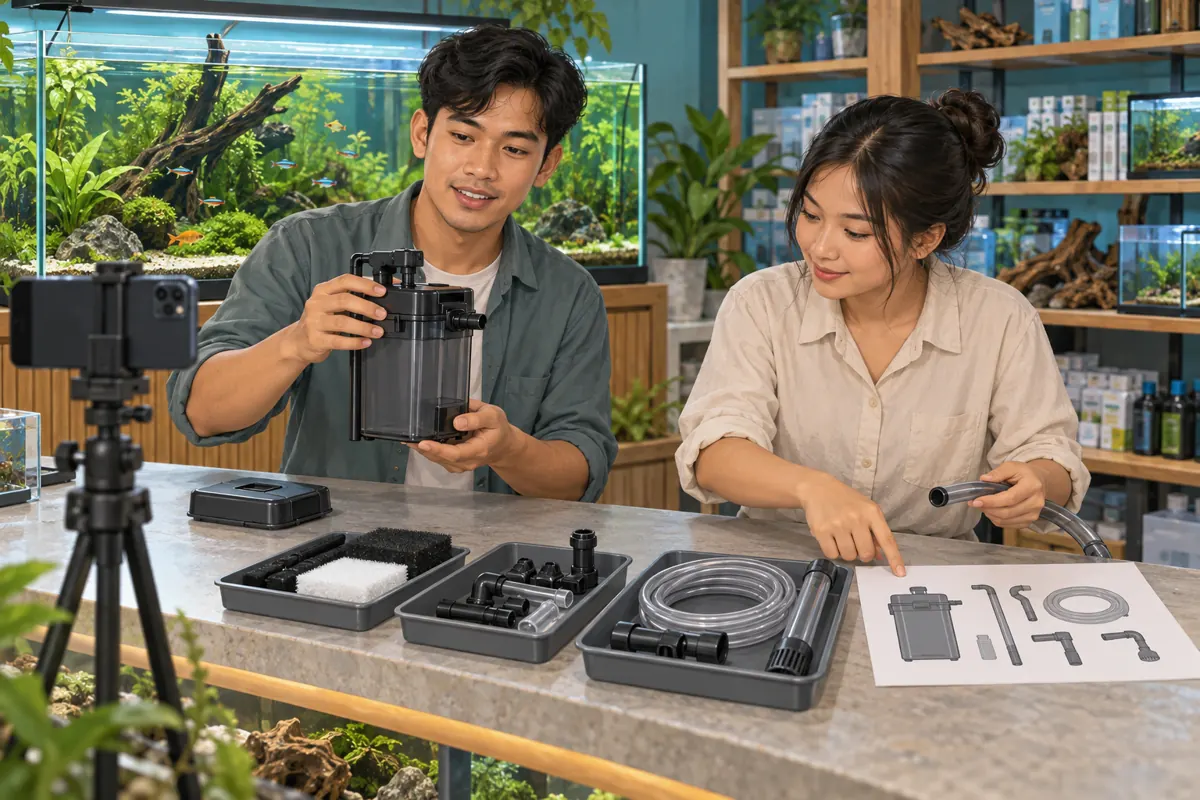
Prepare the next livestream with its later audience in mind. When answering a question, repeat the relevant product name and the substance of the question aloud. Instead of saying “yes, it comes with that,” explain which fitting belongs to which package being shown. Place the included components together on the counter, and keep optional accessories separate. These habits create a recording that remains useful even when the surrounding conversation is unavailable.
Assign a colleague to record issues that need follow-up, such as an uncertain compatibility answer or a collection promise requiring confirmation. During the stream, distinguish a general product explanation from a customer-specific arrangement. State a temporary offer’s actual end date and Cambodia time rather than relying only on “tonight.” Before presenting an answer as settled, check the relevant stock or product information; a confident delivery cannot compensate for an uncertain fact.
9. Test the finished archive as a new viewer
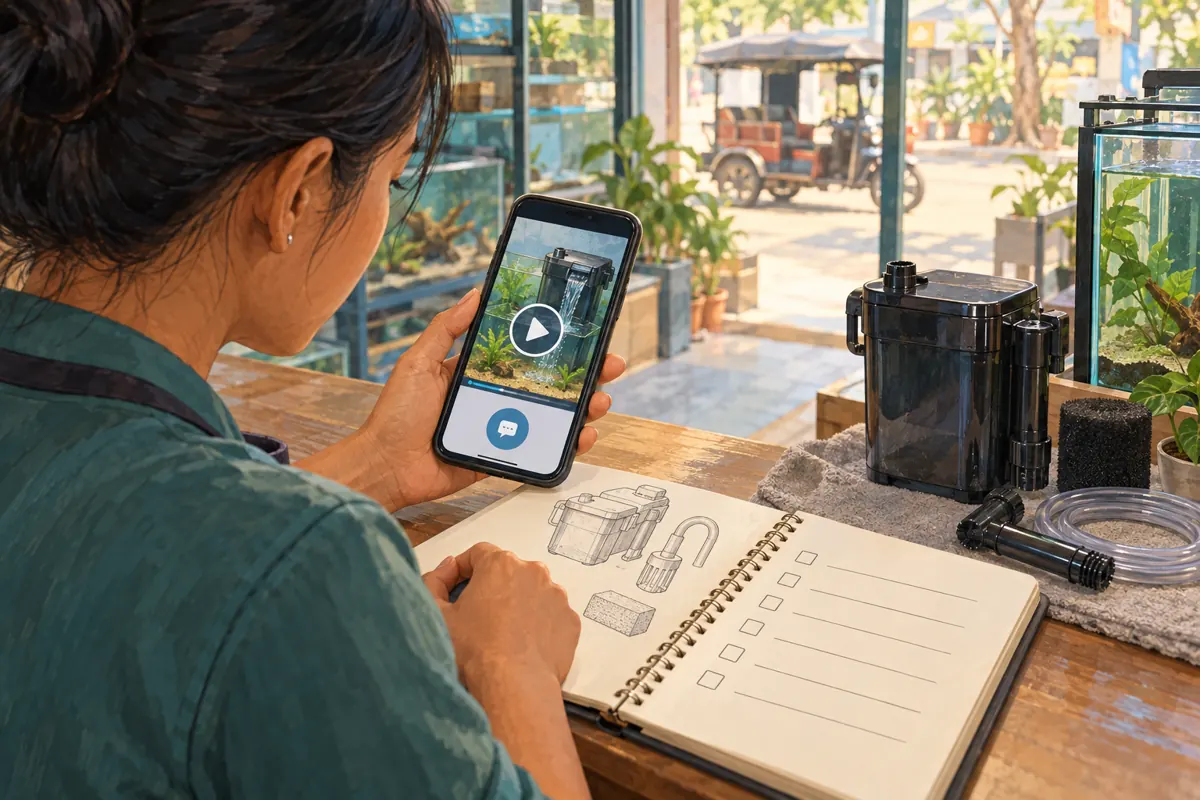
Ask someone who did not attend the livestream to open the recording on a phone. Give them a practical task: identify the demonstrated model, determine what the guide says is included, and find how to ask about current stock. Let them explain their interpretation without coaching. If they believe an old collection promise still applies, identify the exact phrase or visual that created that impression and correct the relevant surface.
Also play a later section directly. People receiving a shared recording may skip the introduction, so the explanation should not depend entirely on an opening disclaimer. Check that the revised description and the video do not contradict each other. If the recording remains confusing, pause further sharing and prepare clearer material. Record who checked the result and which version of the description was approved, so another staff member can continue the work.
10. Review enquiries without inventing promotional success
After sharing the reviewed archive, note the actual questions staff receive. Useful categories include model identification, missing package details, fitting compatibility and collection arrangements. Record whether someone explicitly mentions the recording; do not assume every enquiry came from it. These observations can reveal where the explanation needs improvement without claiming that a change in a public counter caused a business result.
If viewers repeatedly ask whether tubing is included, improve that explanation in the next demonstration. If they understand the package but cannot identify their existing model, prepare a separate label-finding guide. Keep any SMM order records separate from this enquiry log. An order status describes a service transaction, while a customer conversation describes a particular need. Review the archive again when the package, stock position or collection process changes, rather than treating approval as permanent.
Frequently asked questions
Will turning off chat replay remove an offer shown inside the video?
No. A sign filmed on the counter, a spoken offer or chat captured into the video picture remains in the recording. Identify how the message appears before choosing a correction. Switching off the separate replay feature cannot resolve information already recorded into the footage.
Should every aquarium shop disable replay after a livestream?
No. Useful questions can add context, especially when the presenter clearly identifies the product being discussed. Review whether the conversation still supports the archive’s purpose. Temporary arrangements, ambiguous replies and outdated offers require closer attention than a timeless explanation of where a model label is located.
Can a live concurrent-view service help customers find the right replacement part?
A concurrent-view label does not establish that capability. Part identification needs an accurate demonstration, clear model references and a staff response based on the customer’s equipment. Do not infer compatibility advice, Cambodian audience targeting or genuine buying interest from a service title or a viewer count.
What should staff do when someone requests an expired livestream offer?
Explain the current terms courteously and acknowledge the wording they saw. Ask where it appeared so the team can review that surface. Avoid blaming the customer for misunderstanding an archive the shop continued sharing. Record the issue and correct the presentation before using the same recording in another promotion.
Explore the current service catalogue, create an account, or ask a specific question through support tickets.
- YouTube Help: Moderate live chat
- YouTube Help: Learn about Live Chat
- YouTube Help: Fake engagement policy
Prepared with AI assistance. Illustrations explain the workflow and do not represent customer results.