22/10/2026 07:53
Parent Buying Guide or Children’s Show? YouTube Audience Checks for Cambodian Toy-Storage Shops

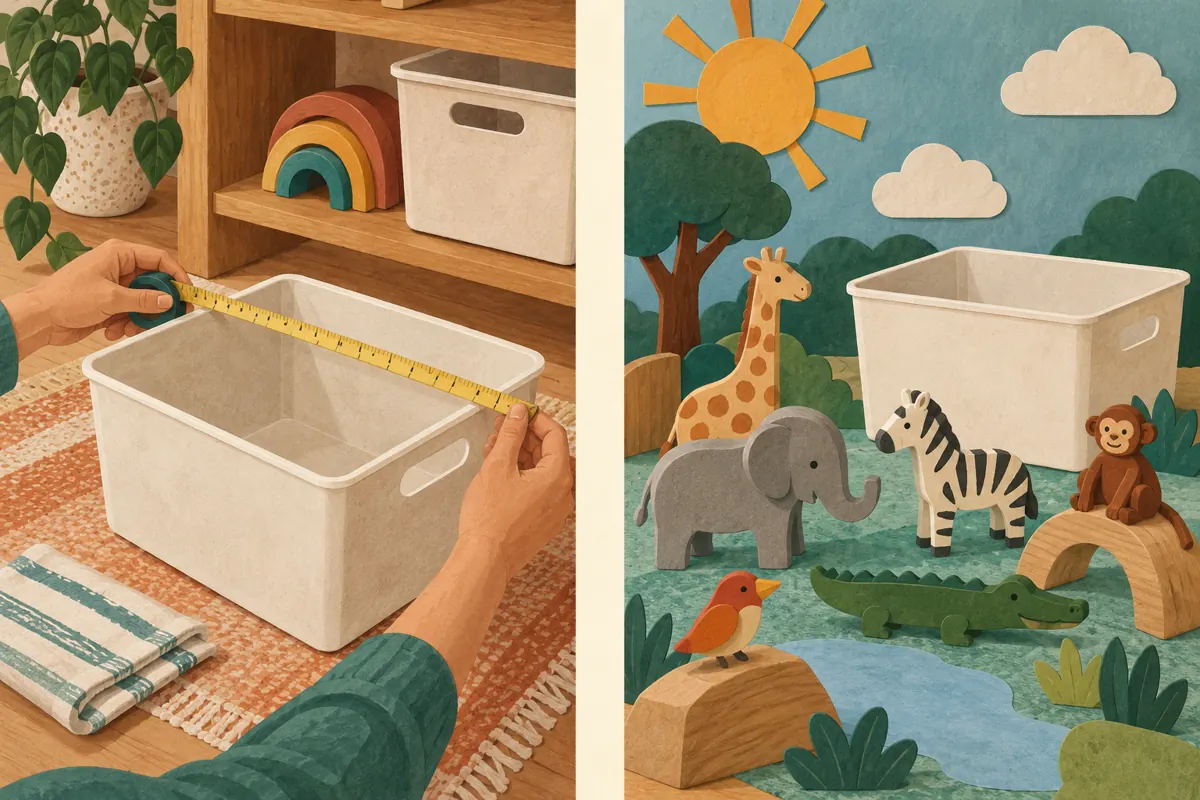
A toy-storage video can serve very different purposes. One helps a parent check whether a bin fits beneath a shelf. Another invites children to follow animal characters through a tidying game. Both show similar products, but their presentation and intended viewers differ. For Cambodian shops promoting these videos, that distinction belongs in the production brief before anyone plans comments, follow-up videos or an SMM service request. This guide explains how to review the actual content, check YouTube’s audience setting and build a practical promotion handover. The shop scenarios below are hypothetical illustrations, not customer accounts or promises of results.
1. Start with the decision the viewer needs to make
Write one sentence describing the video’s purpose before filming. For a hypothetical Phnom Penh housewares shop, it might be: “Help an adult buyer check whether this removable bin fits an existing shelf.” That sentence gives the presenter a clear job. Show the bin’s outer edges, how the handle projects and the space needed to pull it out. Keep the buying question visible throughout the demonstration.
A different brief might say: “Entertain young children with a story about animals putting their toys away.” Treat that as a different production, even if the same bin appears. Do not let a sales objective stand in for an audience assessment. The person paying for a product and the person addressed by a video are not necessarily the same.
2. Review the whole presentation, not one prop
YouTube’s audience guidance considers several factors together, including subject matter, intended viewers, language, child performers, characters and activities. A toy appearing in the frame does not decide the question by itself. Content directed at children can also include a mixed audience, where children are an intended audience without being the primary one. YouTube says its Analytics tool is not designed to determine whether content is child directed.
Make a short review sheet with observations from the finished edit. Record who the presenter addresses, what the viewer is invited to do and what the thumbnail promises. In the hypothetical shop, a spoken explanation of shelf clearance provides different context from a singalong inviting children to name toy animals. These observations support a considered review; they are not an automatic scoring system or a substitute for reading the official guidance.
3. Keep the Cambodian buying context specific
For an adult purchasing guide, use details the shop can actually verify. Show the available bin, the shelf used in the demonstration and whether a lid is included. If the presenter speaks Khmer, have a fluent reviewer check that the wording distinguishes the bin’s outside dimensions from its usable interior. Use the units the shop will repeat when answering enquiries.
Keep local sales information separate from audience classification. A collection point in Phnom Penh or a delivery discussion for another province helps buyers understand fulfilment, but does not settle who the video addresses. Similarly, choosing Khmer or English does not settle the audience question. Review the script’s meaning and presentation rather than treating the language, location or shop category as a shortcut.
4. Check the saved setting on the actual upload
YouTube requires creators to set their audience regardless of location. Its settings support a channel-level choice or review for each video, and individual video settings override the channel setting. For a shop publishing substantially different formats, reviewing each upload can help staff avoid carrying an unsuitable assumption from one production into the next.
On desktop, YouTube documents the channel controls under Settings, Channel, Advanced Settings and Audience. A reviewer can choose the option to review this setting for every video. During upload, check the Audience selection before continuing. Record the final video reference and the person who checked it so the promotion assistant can match the decision to the correct upload.
Do not change an audience selection merely to regain a useful marketing feature. If the content is difficult to classify, pause that promotion decision and examine YouTube’s guidance carefully. Where a material uncertainty remains, seek qualified advice about the particular content.
5. Audit existing videos before reusing a campaign
An older demonstration may return to circulation when a product comes back into stock. Before reusing its promotional copy, check its current audience status. YouTube Studio’s Content filters distinguish videos marked made for kids by the creator, those set by YouTube, videos marked not made for kids and those without a setting. This is more reliable than relying on a staff member’s recollection.
For the hypothetical shop, keep a compact inventory containing the video title, public reference, featured product, reviewer and review date. Add a plain-language note such as “adult shelf-fit demonstration reviewed against final edit.” Avoid a vague entry such as “marketing approved,” which tells the next person little. Review the actual video again if the old notes do not explain its presentation.
6. Build calls to action around available features
YouTube lists comments, cards, end screens and notifications among the features unavailable on made-for-kids content. A promotion plan that relies on viewers answering a pinned question or following an end screen can therefore fail at the design stage. Check the relevant feature before recording a spoken instruction or printing a viewing guide.
Make the demonstration useful even without an interactive ending. Show the product reference clearly, explain what the adult buyer should measure and state which details require confirmation with the shop. For child-directed content, keep any purchasing information addressed appropriately to adults; do not ask children to post personal details or pressure someone into buying.
For the hypothetical parent-facing guide, the final spoken instruction could ask adult buyers to measure their shelf opening before enquiring. Check that any accompanying contact information is current. Do not promise an immediate reply unless someone has actually been assigned to handle enquiries during the promotion period.
7. Put a policy decision before an SMM service decision
The supplied jkj-smm.com catalogue includes “YouTube Like ~ Max 100k ~ 50k/days ~ Instant ~ 𝐍𝐎 𝗥𝗘𝗙𝗜𝗟𝗟”. This is a catalogue title, not verified evidence of delivery, quality or audience. Its description field supplies no additional explanation. The label alone does not establish Cambodian viewers, adult buyers or compatibility with a particular video.
YouTube’s fake engagement policy prohibits artificially increasing views, likes, comments or other metrics. It also warns that a hired promoter’s actions can affect the channel. If a proposed service artificially inflates engagement, do not order it for this workflow. An available catalogue entry does not override the platform’s rules or restore features restricted by an audience setting.
Purchased engagement is not evidence of genuine interest, sales, advertising delivery or Cambodian users. Give the promotion assistant an explicit instruction to assess the proposed method before spending. For this shop scenario, useful work includes improving the demonstration, sharing it with adults who requested product information and preparing accurate answers to genuine enquiries.
8. Review the finished package with a second person
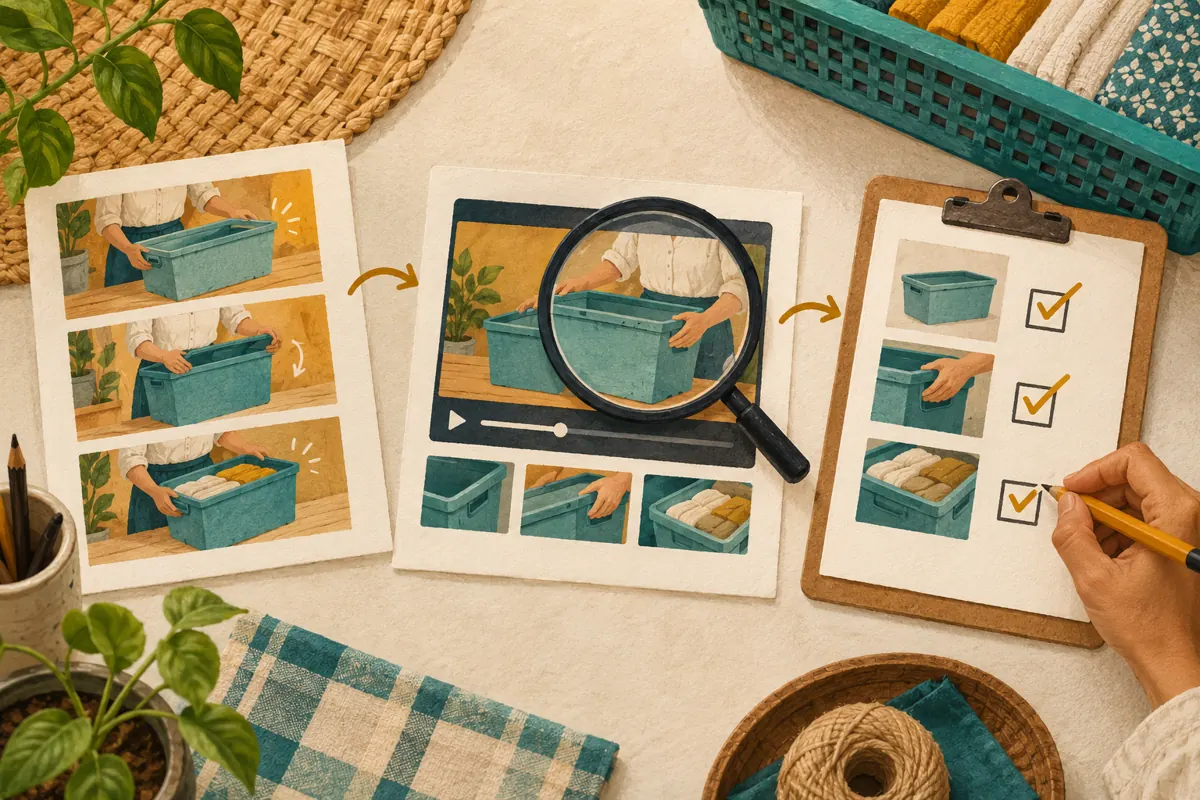
Ask a colleague who did not edit the video to watch the final version with its intended title and thumbnail. Give them the audience brief first, then ask where the presentation supports or conflicts with it. They should review the spoken introduction, music, visual treatment and ending together. A script approved before filming cannot account for every choice made during editing.
In a hypothetical revision, the editor adds a playful animal story to fill a slow section of an adult measuring guide. The reviewer should flag that change for a renewed audience assessment. Simply adding “for parents” to the title would not resolve conflicting content. Either develop a coherent adult guide or review the resulting production honestly on its own terms.
Also test ordinary usability. Can the reviewer identify the exact bin being measured? Can they see the handle clearance? Does the final instruction tell an adult buyer what information to prepare? These checks improve the promotional asset without depending on engagement counters.
9. Avoid shortcuts that create confusing handovers
A common mistake is copying a previous upload’s checklist without watching the new video. Another is treating every product used by children as if it has the same audience. Both shortcuts hide the editorial differences that matter. Keep the review attached to a specific upload and explain the decision in ordinary language.
Do not diagnose a missing comment box from memory or assume a panel service can fix it. Check the video’s current settings and restrictions first. Likewise, avoid writing an instruction such as “ask in the comments” into reusable promotional artwork before confirming that the destination supports it.
One more mistake is counting all incoming messages as buying interest. Separate a question about dimensions from a request for a colour, an unrelated message and a confirmed order. The categories help staff respond correctly and prevent the promotion report from overstating what the audience actually did.
10. Review outcomes through useful adult enquiries
After sharing the guide, collect genuine questions that reveal what remains unclear. If adults repeatedly ask whether the handle fits inside the shelf opening, plan a closer demonstration of that detail. If they ask whether toys are included, clarify the product contents. These are practical editorial signals, although a small set of enquiries cannot establish what every viewer thinks.
Keep promotion activity, customer questions and sales records separate. Record where the link was shared and which questions came back without claiming that every later sale resulted from the video. Ask about the source of an enquiry when appropriate, and allow an unknown answer. The next production brief should reflect the information buyers still need, together with a fresh audience review of the proposed format.
Frequently asked questions
Does showing toys automatically make a storage demonstration made for kids?
No single prop settles the assessment. Review the presentation and intended audience using YouTube’s published factors. A practical buying explanation and a child-directed play story can use the same objects differently. Do not treat this example as a blanket classification for every storage video.
Can we choose not made for kids because we need comments for sales?
The desired sales workflow is not a reason to select an inaccurate audience setting. Assess the content first, then design promotion around the available features. A demonstration should explain its key product information without requiring viewers to retrieve essential details from comments.
What should staff do if YouTube sets the video as made for kids?
Check the status in Studio and review the content against the official guidance. YouTube provides an appeal process if you believe its decision is mistaken. Do not keep changing unrelated settings or promise the promotion team that the restriction will be removed.
Will buying likes help us determine whether Cambodian parents want the product?
No. Purchased likes cannot establish the viewer’s location, parental status, purchase intention or understanding of the demonstration. Artificial engagement also conflicts with YouTube’s policy. Use genuine product enquiries to identify missing information, while recognising that enquiries alone are not completed sales.
How detailed should our internal audience review be?
Keep enough detail for another colleague to understand the decision: the upload reference, intended viewers, observations from the finished video, selected setting, reviewer and date. Record uncertainties explicitly. A short explanation tied to the actual content is more useful than a checkbox saying only that the video was approved.
Explore the current service catalogue, create an account, or ask a specific question through support tickets.
- YouTube Help: Determining if your content is made for kids
- YouTube Help: Set your channel or video’s audience
- YouTube Help: Check if your video’s audience is set as made for kids
- YouTube Help: Watching made for kids content
- YouTube Help: Fake engagement policy
Prepared with AI assistance. Illustrations explain the workflow and do not represent customer results.