21/10/2026 04:34
Can Learners Keep the Beat? TikTok Duets for Cambodian Drum Workshops
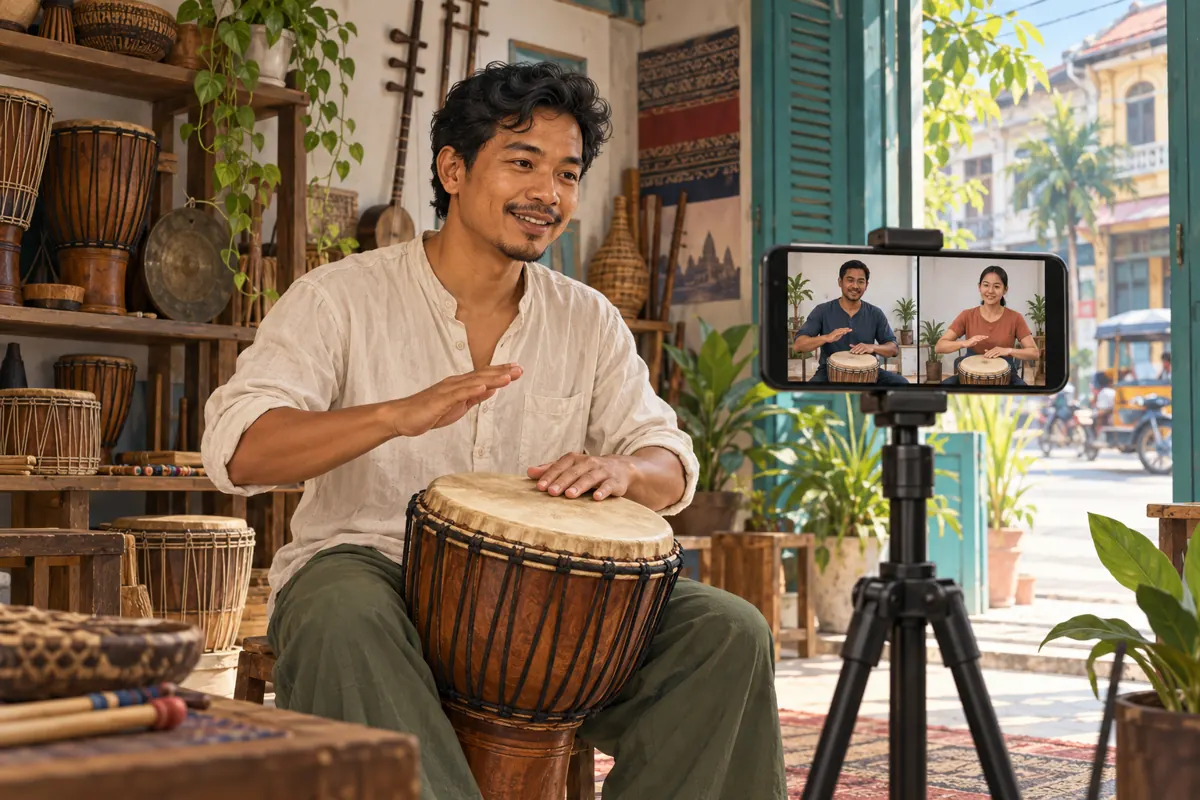
A drum demonstration can sound impressive while leaving a beginner unsure when to join in. For a Cambodian workshop promoting introductory lessons, that gap matters: viewers need to understand the teaching experience before deciding whether to enquire. A carefully prepared TikTok Duet exercise can give them a visible reference while they practise alongside the instructor. The useful outcome is a clearer learning experience and an informed conversation about lessons. This guide follows a hypothetical Phnom Penh workshop from choosing a practice task to reviewing responses, with a specific decision point for businesses considering SMM panel services.
Choose a learning question that needs two views
Start with one question: can a beginner join a simple repeating pattern after a clear starting cue? That is narrow enough to demonstrate and review. Avoid trying to teach posture, several strokes, instrument history and a complete performance in the same invitation. Each additional demand makes it harder to tell whether the viewer understood the exercise.
TikTok describes Duet as placing your video beside another creator’s video. That format suits a simultaneous practice reference. The workshop can show the instructor’s hands while another adult demonstrates following the pattern. The feature itself does not establish teaching quality or produce enrolments. See TikTok’s official [Duet instructions](https://support.tiktok.com/en/using-tiktok/creating-videos/duets-settings?content_language=English&facet3=pdf).
Use an ordinary demonstration instead when the important detail needs the full screen. A close view of finger placement may become too small in a divided frame. Choose the format according to what learners must see.
Define the invitation before recording
In the hypothetical workshop, the instructor prepares an original beginner exercise and invites adults to follow its pulse. The invitation explains that posting a response is optional. Someone can practise privately, ask a question or enquire about a lesson without making a public performance. This gives hesitant beginners a useful way to participate.
Write the intended action in one sentence before filming: practise the repeating pattern, then tell the workshop which transition feels unclear. That question gives staff something concrete to answer. A vague request to show talent may attract performances without revealing whether the introductory lesson is understandable.
Keep commercial information separate from the exercise instructions. Identify the workshop’s actual Cambodian location, teaching language and enquiry route using confirmed details. Do not imply that every viewer can attend locally. If lesson times are still undecided, invite an availability enquiry rather than announcing an unconfirmed session.
Check reuse settings before inviting responses
TikTok says an account must be public for others to Duet its videos. Its documented account path is Profile, Menu, Settings and privacy, Privacy, then Reuse of content. Review the available audience choice there, along with the individual post’s reuse setting. TikTok also explains that disabling Duet affects other reuse features, including Stitch, stickers and adding the post to a Story. See [Duet privacy settings](https://support.tiktok.com/en/account-and-privacy/account-privacy-settings/duets).
Make this a deliberate publishing decision. The workshop should understand the wider reuse choice before opening a teaching clip for participation. Check the controls shown in the current app instead of relying on an old screenshot or assuming every account displays identical options.
Use an adult colleague for the initial demonstration and explain where the recording will appear. If someone is uncomfortable with public reuse, film another participant or publish a solo lesson. Participation in a class should not depend on agreeing to become promotional material.
Build a source video with a usable entry point
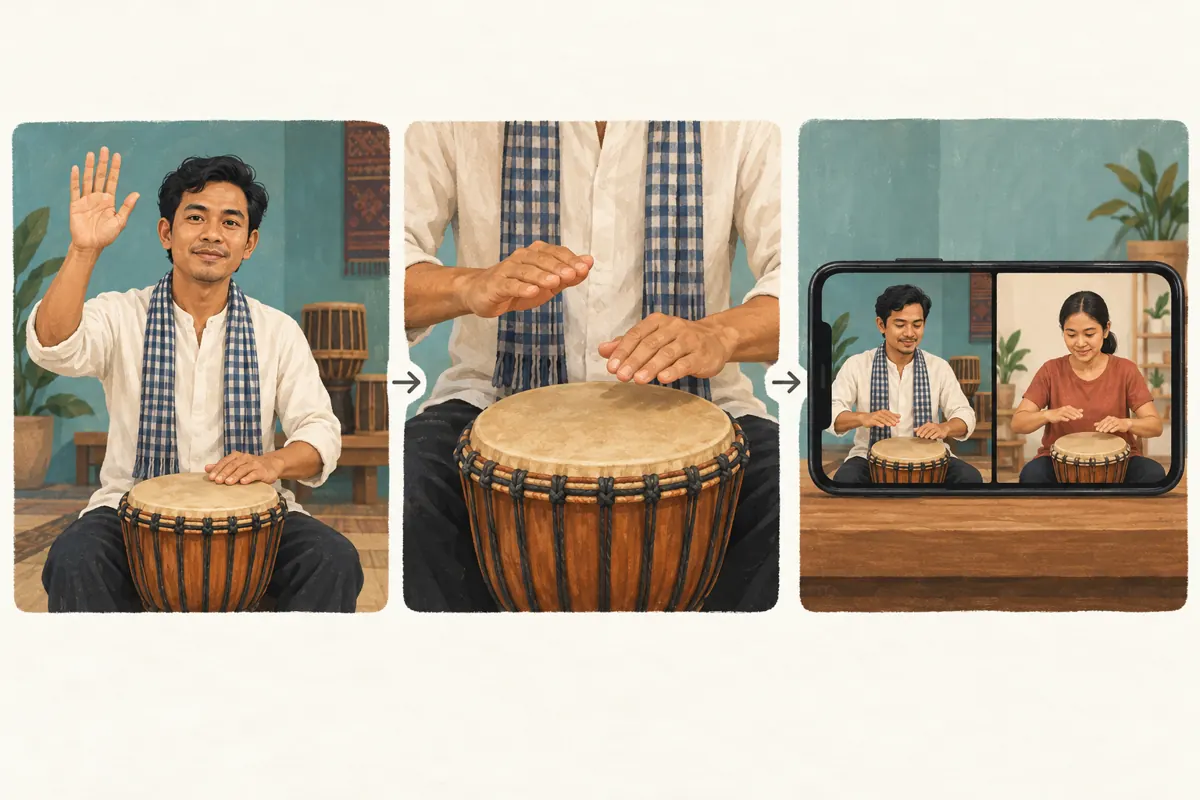
Plan three simple moments: preparation, a visible starting cue and the repeating exercise. Leave enough preparation time for a learner to position their hands. Keep the cue distinct from the first strike, so someone watching a small screen can tell when preparation ends and playing begins.
Frame both hands and the relevant drum surface throughout the exercise. Check the likely divided-screen crop before recording the final take. A beautifully composed wide shot of the room is less helpful if the hands disappear into a small corner. Use steady lighting and avoid moving the camera midway through the pattern.
Speak the instructions in the language the intended learners understand, with Khmer explanations where appropriate for the workshop’s audience. Explain unfamiliar instrument terms rather than assuming English labels are familiar. If the exercise is newly devised for this video, describe it that way; do not give it an unsupported traditional or ceremonial identity.
Record a colleague’s Duet as a practical test
TikTok’s creation guidance starts from the source video’s Share button and the Duet option. Follow the recording and editing controls available in the app, then review the result before posting. The workshop’s first test should answer an editorial question: does this paired presentation make the exercise easier to follow? The official [Duet instructions](https://support.tiktok.com/en/using-tiktok/creating-videos/duets-settings?content_language=English&facet3=pdf) provide the platform steps.
Ask the colleague to follow the posted explanation without additional coaching. If they need an off-camera signal to begin, the source clip needs a clearer cue. If their hands are hidden, adjust the framing. If the instructor’s speech continues over the practice passage, shorten the explanation or move it before the exercise.
Identify a staff demonstration honestly in its caption. A colleague playing the learner role is a useful illustration, but it is not a customer testimonial. Do not present a rehearsed response as independent evidence that a new student mastered the lesson.
Listen for clarity before judging timing
Review the test with sound on, using the phone speaker as well as headphones if available. Listen for distorted strikes, background traffic, room echo and one recording overpowering the other. The listener should understand which sound belongs to the reference and whether the response is audible. Extra music usually adds little to this particular teaching task.
Watch the hands and listen together before commenting on a participant’s timing. A confusing recording is not sufficient evidence of a learner’s ability. If the relationship between movement and sound is unclear, ask for clarification or offer an in-person explanation instead of publicly labelling the performance wrong.
Also watch once with sound muted. A viewer will not learn the rhythm fully that way, but they should still recognise the exercise, starting cue and intended action. Keep short instructional text away from the hands, and check any captions for meaning before approving the video.
Give interested viewers a manageable next step
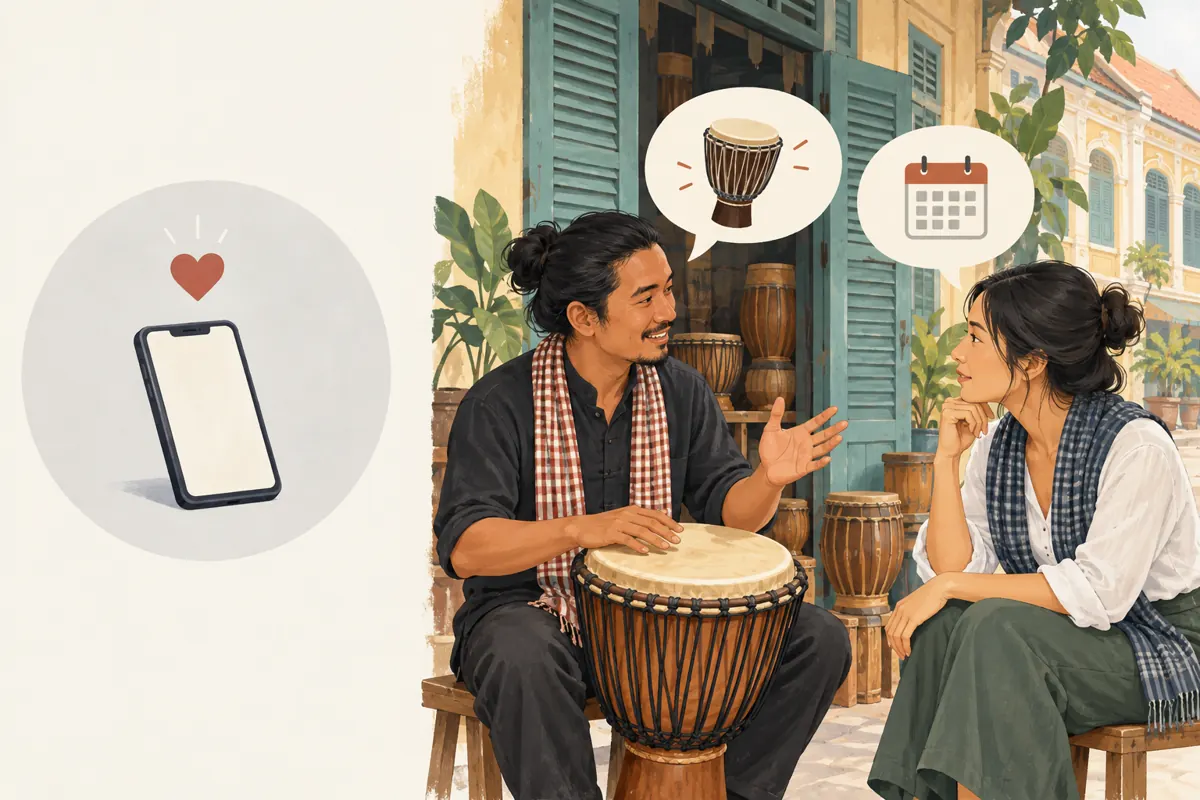
Connect the practice video to a real service the workshop can explain. A suitable invitation might ask viewers to enquire about beginner lessons and mention whether they already have an instrument. Do not require a public Duet as proof of interest or eligibility. Someone who asks a careful question may be closer to booking than someone who enjoys posting performances.
Prepare an enquiry response covering the confirmed location, lesson language, current availability and whether instruments are provided. Ask only for details needed to discuss the lesson. Scheduling and personal contact information belong in an appropriate private conversation, not beneath a public practice video.
Allocate staff time to answer the exercise question after sharing the post through the workshop’s usual channels. Promotion creates an obligation to respond clearly. If nobody can review learner questions that week, publish a self-contained demonstration and postpone the participation invitation until someone can support it.

Make the SMM panel decision before spending
A relevant catalogue example in the brief is “TikTok - Likes ~ [ Bot Profiles ] ~ Max 1M ~ 50k/Days ~ Instant ~ 𝐍𝐎 𝗥𝗘𝗙𝗜𝗟𝗟”. Its title identifies a likes listing and explicitly mentions bot profiles. The supplied description is empty, so the wording is not independent verification of delivery speed, limits or other performance claims.
That listing does not solve this workshop’s problem. Likes cannot show whether someone followed the starting cue, understood the instruction or wants lessons. Purchased engagement is not evidence of genuine interest, sales, advertising delivery or Cambodian users. The brief also supplies no evidence of a service that recruits suitable learners to make meaningful Duets.
TikTok states that it does not allow fake engagement, including services that artificially increase likes or followers. See its explanation of [how TikTok counters deceptive behaviour](https://newsroom.tiktok.com/how-tiktok-counters-deceptive-behaviour?lang=en-150). For this workflow, decline artificial engagement and put the effort into filming, clear instruction and answering enquiries. A catalogue review can reasonably end without an order.
Review responses without inventing a success story
Keep a small review note containing the source post, the exercise question, recurring misunderstandings and resulting content changes. Record lesson enquiries separately from public reactions. An enquiry becomes a booking only when the workshop’s normal booking process confirms it. Avoid turning several different stages into one flattering total.
In a hypothetical review, viewers repeatedly ask whether the second hand enters immediately after the starting cue. The workshop responds by filming a slower explanation of that transition. This is an editorial decision based on a repeated question, not a claim that the original post failed or that the replacement will attract more customers.
If earlier purchased engagement affected the account or post, document that context when reviewing totals. Do not subtract an assumed quantity and call the remainder authentic. Describe what can actually be observed: the content of a question, a voluntarily submitted practice response or a confirmed lesson arrangement.
Avoid mistakes that make participation less useful
One common mistake is changing the pattern halfway through while inviting beginners to follow along. Another is placing a promotional message over the exact hand movement learners need to see. Keep the exercise stable and place business information where it does not interrupt instruction. If the lesson requires variation, explain the change before it happens.
Do not treat public reuse permission as a blanket agreement to use someone’s response in every future campaign. Ask before featuring a learner elsewhere, and explain the intended context. Avoid mocking mistakes or assembling a compilation that implies every participant is a satisfied paying customer.
Finally, do not leave an inaccurate invitation circulating after lesson arrangements change. Review the public wording and the staff enquiry response together. The next person contacting the workshop should receive a consistent explanation of what is currently available, even if they discovered the business through an older practice clip.
Frequently asked questions
Should every drum lesson video allow Duets?
No. Open participation when the exercise benefits from a parallel view and the workshop is comfortable with reuse. Detailed technique demonstrations may work better as full-screen videos. Keep public participation optional, especially when learners would rather practise privately or ask questions directly.
What if a learner cannot find the Duet option?
Review the source post and the workshop’s current reuse settings against TikTok’s official guidance. Do not promise access for every account or suggest bypassing a restriction. Offer a standalone practice video or another appropriate way to ask for help so the learner can continue.
Can a learner’s Duet be used as a testimonial?
A practice response alone does not establish that someone purchased lessons, recommends the workshop or achieved a particular result. Ask separately before using their words or recording as promotional evidence. Preserve their actual meaning and explain any staff involvement or staged demonstration.
Do more likes mean the exercise is attracting Cambodian students?
No. Likes do not establish location, learning needs or willingness to book. Purchased likes add no reliable evidence of those things. Use voluntary conversations about location, lesson availability and instrument needs to understand potential customers, while keeping enquiries distinct from confirmed bookings.
What should the workshop improve if nobody submits a Duet?
First check whether the invitation is understandable, the exercise is manageable and public participation feels comfortable. Ask an adult colleague to test the instructions. Viewers may still practise privately, so absence of public responses does not prove absence of interest. Improve the learning task before drawing a marketing conclusion.
Explore the current service catalogue, create an account, or ask a specific question through support tickets.
- TikTok Help Center: Duet creation instructions
- TikTok Help Center: Duet privacy settings
- TikTok Newsroom: How TikTok counters deceptive behaviour
Prepared with AI assistance. Illustrations explain the workflow and do not represent customer results.