22/10/2026 10:41
New Shop Name, Old QR Card? YouTube Handle Changes for Cambodian Repair Shops
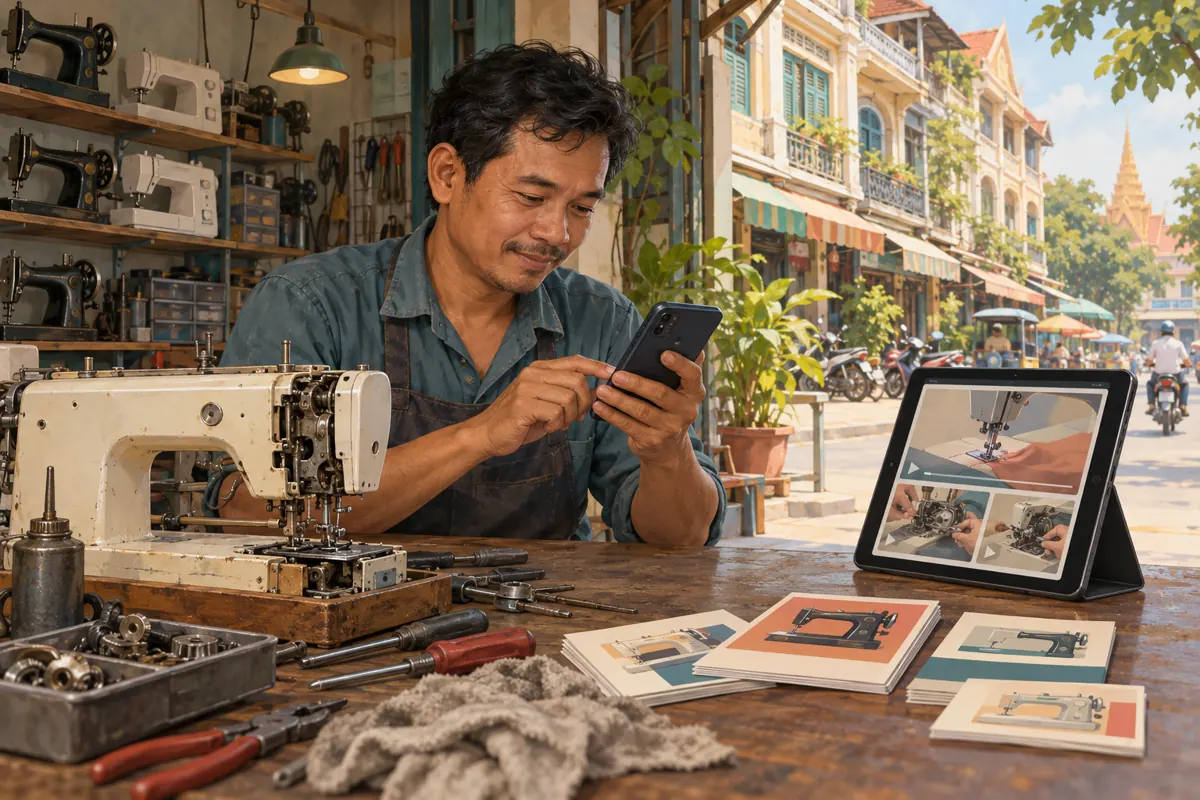
A repair shop can update its YouTube identity in minutes while leaving old links on counter cards, leaflets and saved customer replies. Those forgotten references matter when someone wants to find a repair demonstration before bringing in a machine. For Cambodian businesses promoting useful videos through Facebook, Telegram and printed materials, a handle change should include a small distribution audit. This guide follows a hypothetical sewing-machine repair shop through that process. It explains what to change, what to test and how to keep any SMM-related records accurate without treating purchased engagement as evidence that customers found the right shop.
1. Decide whether the handle actually needs changing
Start with the business reason. In this hypothetical example, a Phnom Penh sewing-machine repair shop has expanded beyond the market stall named in its original branding. Its old YouTube handle still refers to that stall. The owner wants customers who know the newer shop name to recognize its demonstrations. That is a concrete identification problem. A quiet week of enquiries, by itself, would not establish that the handle needs replacing.
Write a one-sentence acceptance condition before editing: a customer using the shop’s current promotional materials should reach the correct channel and recognize the business. Then decide whether the display name alone can solve the confusion. If the existing handle remains understandable, retaining it may avoid unnecessary printing and link replacement. Ask the counter staff which name customers actually use, and check whether a proposed spelling is easy to read aloud over the phone.
2. Separate the display name, handle and channel ID
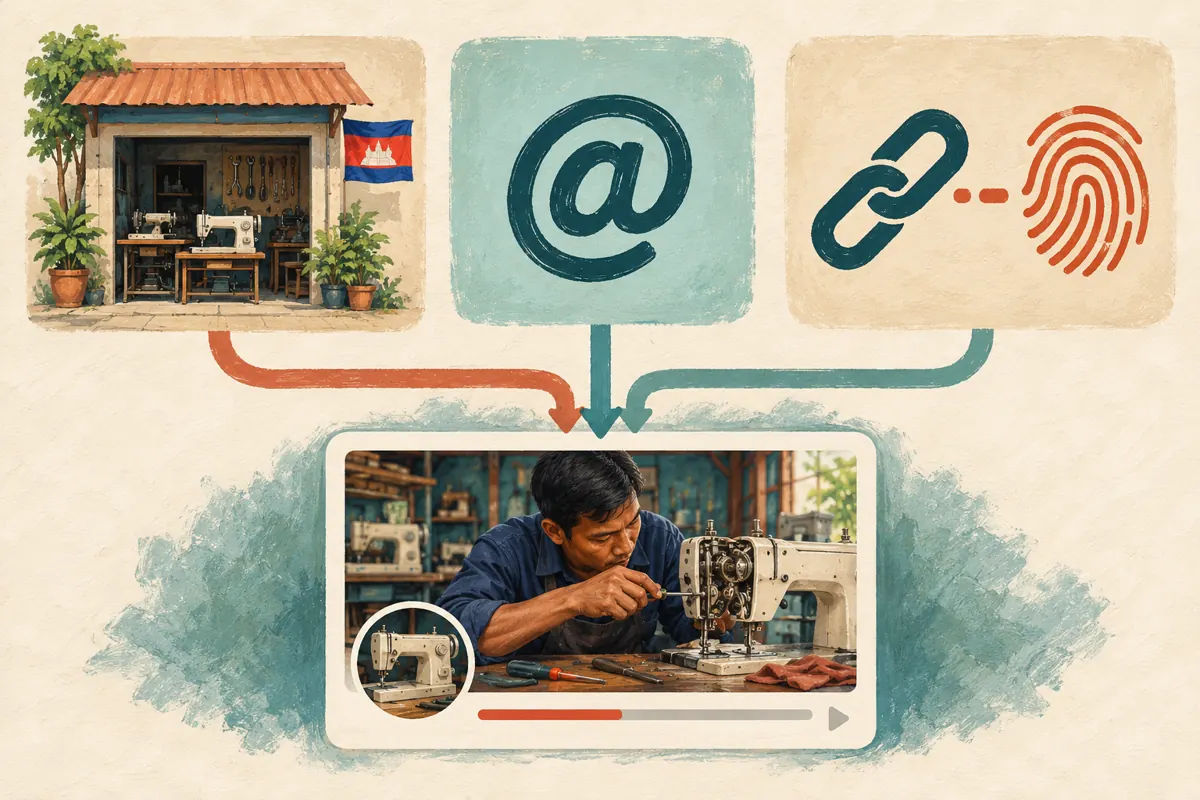
YouTube distinguishes a channel’s name from its unique @handle. Its URL guidance also describes an ID-based channel address containing the channel’s unique identifier. These are different references to record during a rename. In a simple working sheet, give each its own field: current display name, current handle, proposed handle and ID-based channel URL. Copy actual addresses from the channel rather than reconstructing them from memory.
Use this distinction to prevent an expensive misunderstanding. Changing the words printed above a QR code does not change the address encoded inside it. Likewise, a familiar thumbnail does not prove that a link leads to the intended channel. Keep one known public demonstration as an additional visual reference during testing. A staff member should be able to compare the destination with the recorded channel identity and recognizable repair content, instead of relying on a similar shop name.
3. Choose a handle customers can reliably share
YouTube supports Khmer handles, but its guidance notes that unfamiliar keyboards and some external apps can complicate typing or sharing handles containing characters outside a basic Latin character set. This is a reason to test the intended customer journey, not to assume Khmer is unsuitable. Consider the language your customers use, how staff send links and whether visitors usually scan a card or type an address.
Prepare a short list of sensible spellings before making the change. Avoid adding a temporary promotion, a repair price or a particular month to a lasting business identifier. In the hypothetical shop, staff compare a familiar transliteration with the shop’s Khmer name by asking a colleague to read and retype each option. This informal usability check does not establish availability. Confirm the final choice through YouTube’s own interface, and keep the spelling consistent in the materials you control.
4. Inventory every route into the channel
Collect references before the rename. Look at the shop’s Facebook profile links, Telegram messages used for enquiries, website buttons, video descriptions, email signatures, printed receipts and counter displays. Include image files that contain a written handle: their text will not change when the channel changes. For each item, record where it appears, its current destination, who can edit it and whether replacement requires printing.
Prioritize materials still being distributed. A stack of cards beside the cashier deserves attention before an old leaflet stored in a drawer. Separate links you control from references shared by others. You may be able to update your own website immediately, while a partner’s page needs a correction request. Do not promise to recall every forwarded message. Instead, make current official information clear and provide a replacement link when someone reports an outdated reference.
5. Plan around the temporary overlap
According to YouTube’s handle-change guidance, handles can be changed twice within 14 days. YouTube holds the previous handle for 14 days, during which both former and updated handle URLs work. After that, the previous handle becomes available for others to select. Treat this as a transition window, not a permanent forwarding arrangement. A successful test of an old link during that window does not make it suitable for a new print run.
Choose a change date when someone can complete the follow-up work. Prepare replacement artwork and a list of editable links first, but confirm the final destination before producing cards. Record the actual change date and set an internal deadline comfortably before the overlap ends. If the team cannot update heavily used materials in time, postpone the rename where practical. Avoid repeatedly switching handles while different staff members continue sharing different versions.
6. Make the edit and explain continuity
YouTube’s desktop instructions place the handle under YouTube Studio, then Customization, then Profile. The owner edits the Handle field and selects Publish. Before confirming, check that the correct channel is selected and compare the proposed spelling with the approved working sheet. Afterward, copy the resulting public link into that sheet and record when the change was made.
Prepare a brief customer-facing explanation in the language normally used by the shop. For the hypothetical business, the message could explain that the repair demonstrations now appear under the updated shop name, while identifying the previous name for recognition. Only say the team, address or services remain the same if that is true. If the rename accompanies a move, explain the location change separately. A familiar profile image or representative workshop photo can help continuity, provided it still accurately represents the business.
7. Replace QR destinations with care
Scan each existing QR card and inspect its actual destination. A code may contain a handle URL, a channel ID URL, a particular video address or an intermediate website link. These require different decisions. If the card promises a specific threading demonstration, opening the general channel homepage may force customers to search again. Preserve the intended task when choosing a replacement destination.
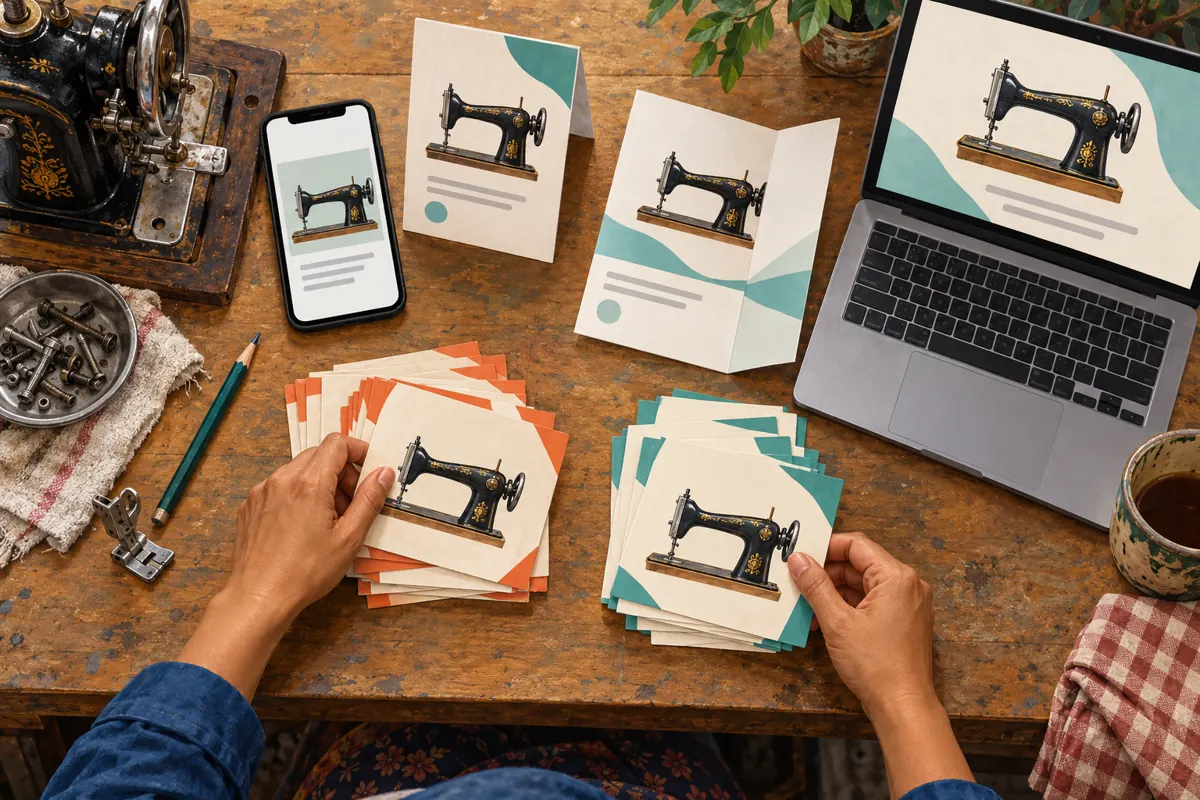
For a general channel card, consider using the verified ID-based channel URL while printing the recognizable shop name beside the code. This separates the encoded identifier from the handle wording, but still requires testing. Produce one physical proof before ordering a batch. Scan it at the intended size, under ordinary counter lighting, and check the resulting page. Remove obsolete cards from the distribution area so an assistant does not accidentally hand them out after the new cards arrive.
8. Test from the customer’s starting point
A link copied directly from your working sheet is only one test. Open the actual Facebook link, the actual message used by staff and the actual printed QR code. Test on a phone that is not operating inside the owner’s YouTube Studio session. Where possible, compare the YouTube app route with a browser route. Record the destination reached and any point where the customer must guess what to do next.
Ask a colleague to complete a concrete task without coaching: find the shop’s demonstration for identifying a sewing-machine model. Observe whether the person recognizes the channel and finds relevant content. If they reach the correct channel but cannot locate the demonstration, the remaining problem is navigation or content organization. If they reach an unrelated page, investigate the source link. Keep those findings separate so the team does not keep changing its handle to solve a different problem.
9. Reconcile SMM records without assuming suitability
If an SMM panel record or promotional brief contains the old handle, preserve that original reference and add the new verified address with the change date. Do not silently rewrite historical records. For any existing request, ask support how a destination change is handled rather than submitting a duplicate or assuming an order follows the renamed channel. Resolving the target reference does not establish that the underlying service is appropriate.
One public catalogue label is “YouTube - Views ~ Native Social Ads ~ Min 1M ~ 100k/day ~ 0-3hrs ~ 𝗥𝗘𝗙𝗜𝗟𝗟 30D”. It is presented as a views service, but the supplied listing has no explanatory description. Its wording alone does not verify advertising placement, delivery claims, Cambodian targeting or official affiliation. YouTube prohibits artificial engagement and warns that a hired promoter’s methods can affect the channel. Purchased engagement is not proof of genuine interest, sales, ad delivery or Cambodian users. Decline methods that inflate metrics artificially.
10. Watch for mistakes that create false confidence
The most common testing error is checking the new link while leaving the old one in customer materials. Another is approving a QR design from its appearance without scanning the printed proof. A third is treating a temporary redirect as evidence that no replacement is needed. Assign someone to inspect the source material itself, not merely the destination saved in the project notes.
Avoid measuring the rename by a sudden change in views or subscribers. Those numbers cannot isolate whether the link cleanup helped, especially when other promotion happened at the same time. More useful observations include a reported broken card, a message sent with an obsolete address or a customer who reached a similarly named business. Record those issues and the repair made. Do not turn an internal test performed by staff into a customer testimonial or a claim about improved sales.
11. Close the transition with a usable handover
Keep a compact handover containing the approved public link, the change date, the final card artwork and the list of references checked. Add unresolved items with a named owner. For example, a partner may still need to replace a link on an older promotional page. Preserve a note of that limitation instead of marking the whole exercise complete because your own counter display is correct.
After the transition window, revisit the materials customers still encounter. Confirm that current links work and retire outdated templates from everyday use. Keep historical versions in a clearly separate archive if needed for recordkeeping. Give counter staff one approved message they can copy when customers ask where the videos moved. The practical result should be a consistent route from a repair question to the right demonstration, with enough context for someone unfamiliar with the rename to recognize the shop.
Frequently asked questions
Can we leave old QR cards in circulation because they still open the channel?
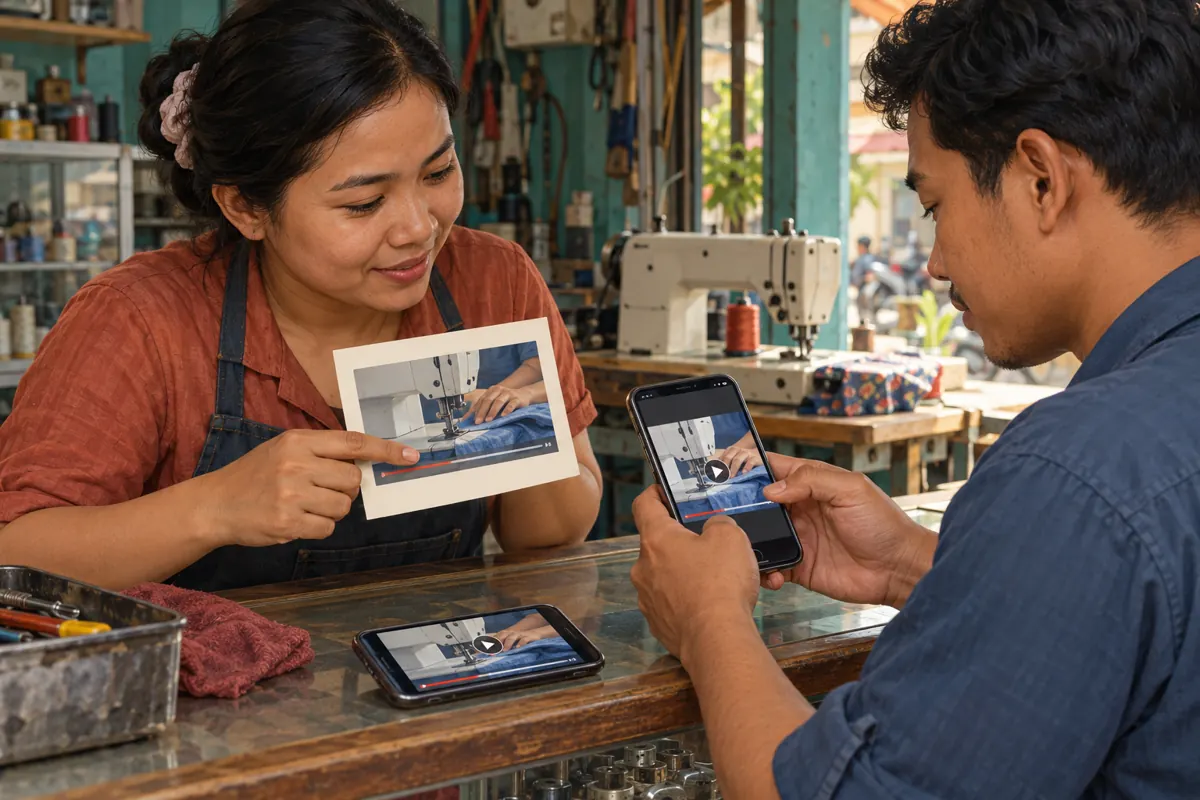
First identify what the code contains. If it uses the former handle, a successful test during YouTube’s temporary overlap does not establish lasting access. Replace actively distributed cards. A card using a verified channel ID URL may not need a destination change, but its printed name, instructions and actual landing page still need review.
Should a Cambodian shop always choose a Latin-letter handle?
No. Choose an identity customers recognize, then test typing, copying and opening it through the apps they use. Khmer may be appropriate for the audience. If a particular sharing route causes trouble, test the channel ID URL for that route instead of assuming the shop must abandon its preferred public language.
What if the desired handle is unavailable?
Prepare an alternative that remains easy to recognize and communicate. Avoid impulsive strings of digits that staff cannot remember accurately. YouTube suggests trying variations such as periods, numbers or underscores, subject to its naming rules. Confirm an accepted choice before ordering printed materials, and do not assume someone can sell or transfer a handle to you.
Does correcting the handle make an SMM service safe or effective?
No. Correct identification addresses only where a request points. The service method, platform policy and evidence supporting its claims require separate evaluation. A catalogue title cannot prove authentic attention or local demand. If the method artificially increases engagement, a correct destination does not remove the policy problem.
How can a small shop tell whether the cleanup worked?
Use direct checks: current cards scan correctly, published links reach the intended channel, and staff can send the approved address without searching old conversations. Keep a log of genuine customer access problems. These observations support a conclusion about navigation reliability; they do not establish that the rename caused enquiries or sales.
Explore the current service catalogue, create an account, or ask a specific question through support tickets.
- YouTube Help: Change, view, or hide your handle
- YouTube Help: Learn about YouTube handles
- YouTube Help: Understand your YouTube channel's URLs
- YouTube Help: Manage your YouTube channel’s profile
- YouTube Help: Fake engagement policy
Prepared with AI assistance. Illustrations explain the workflow and do not represent customer results.