21/10/2026 19:22
Which Umbrella Was Yours? Telegram Contact Notes for Cambodian Repair Shops

A useful umbrella-repair demonstration can bring a difficult follow-up problem: several people send similar photographs, then return later asking whether their umbrella can be fixed. A display name alone may not remind the repairer which person reported a bent rib, which asked about torn fabric, and which simply wanted directions. Telegram contact notes can help preserve that context before the next reply. For a Cambodian shop promoting its work through a Telegram channel, the practical goal is to remember the question accurately and identify the next action. This guide develops a simple workflow from public demonstration to private enquiry, with clear limits on what a note proves. All shop situations and sample notes below are hypothetical, not customer testimonials or reported business results.
1. Give each enquiry a useful memory cue
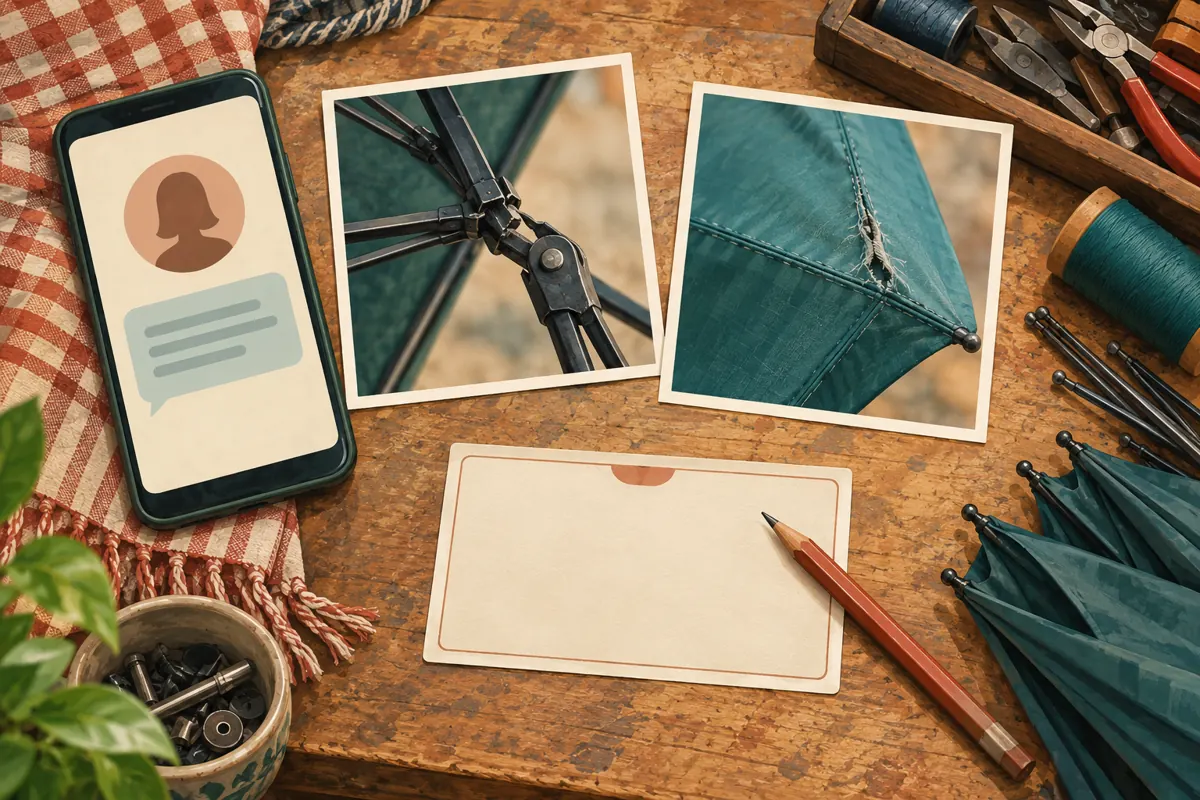
Imagine a hypothetical umbrella-repair counter in Phnom Penh. Its owner posts a demonstration comparing a loose canopy attachment with a damaged frame joint. One viewer sends a close-up of a hinge; another sends a picture of fabric pulling away from a tip. Both later ask, “Can I bring it tomorrow?” Without context, the owner could answer the wrong repair question or imply that a replacement part is available before checking.
A useful contact note should answer three questions: what did this person ask about, what remains unknown, and what should happen next? It should help the owner return to the conversation. It should not contain a diagnosis made from an unclear photograph. Write “hinge photo received; matching part not checked” rather than “easy repair.” That distinction keeps the next reply grounded in the information actually available.
2. Add the note through the contact profile
Telegram documents private notes when adding or editing contacts. Open the person's profile, choose Add to Contacts if needed, then use Edit to set the note. Telegram says the note appears beneath the person's bio and is visible only to you. These feature details come from Telegram's official announcement: [Notes for Contacts](https://telegram.org/blog/comments-in-video-chats-threads-for-bots).
Start with a consenting colleague or a low-stakes internal contact to learn the controls on the device used at the counter. Save a harmless test note, leave the profile, and reopen it to check the result. If the field is absent, check for an official app update before building the workflow around it. Keep serving customers through ordinary conversation while resolving the interface question; a missing note field should not delay a repair enquiry.
3. Use a compact format that preserves uncertainty
A practical format is: enquiry date; item and problem; missing detail; next action. A hypothetical entry might read, “21 October: blue folding umbrella, loose hinge reported. Need full frame photo. Reply after part check.” The date gives the summary an age. The phrase “reported” distinguishes the customer's description from the repairer's inspection. The final sentence tells the owner what remains to be done.
Keep the full discussion and photographs in their original conversation. A note works best as a short index, not a duplicate transcript. Avoid compressing several conditions into vague shorthand such as “OK tomorrow.” That could mean a visit is possible, a quote is accepted, or the repair will be finished. If a term is ambiguous, write the actual condition: “Customer asked about visiting tomorrow; time not agreed.”
Use Khmer for internal notes when that is clearest for the person answering. Preserve a model marking exactly when it matters, and distinguish a customer's everyday description from a technical part name.
4. Check identity before relying on the summary
Open the profile from the active conversation rather than choosing a similar name from memory. Then compare the note with the latest messages and the relevant photograph. A customer may use the same account to ask about a second umbrella, or a family member may arrange collection. The note should not make yesterday's item the automatic subject of today's question.
In a hypothetical exchange, someone who previously asked about a black folding umbrella now sends a red canopy photograph. Ask whether this is the same item before discussing the earlier assessment. If there are two jobs, give each a clear reference in the shop's normal job record and keep the contact note brief. One person can have several enquiries; a single contact summary should never force them into one repair history.
5. Connect the promotional post to a clear first question
Prepare the enquiry route before sharing the demonstration widely. Explain what the video shows, what it cannot establish about another umbrella, and what a viewer should send for an initial discussion. A useful invitation could ask for a full umbrella photograph and a close-up of the damaged area. Do not invite people to force a jammed mechanism open just to reproduce the demonstration.
For a Cambodian shop serving walk-in customers and people travelling from another district, distinguish an initial photo review from an inspection at the counter. State the actual location and available inspection arrangements in the public offer. When an enquiry arrives, the note can record which required detail is missing. This makes the promotional message and the reply process work together: the post prepares the question, while the private summary helps the owner continue it.
6. Turn a remembered question into an explicit agreement
Use a decision process with separate stages. If the item is unclear, ask which umbrella the person means. If the damage is unclear, request the missing view. If repairability depends on inspection or a replacement part, say so before discussing completion. Only after the relevant conditions are understood should the conversation move toward an agreed visit or job.
A hypothetical note saying “wants Friday collection” records a preference. It does not establish that the shop accepted Friday as a deadline. Send the actual arrangement in the conversation, including any unresolved conditions, and obtain the customer's response. Then update the note to reflect that exchange. If a formal repair ticket is used, keep the agreed scope and collection details there. The note should direct attention to that record rather than become an informal substitute for it.
Read the latest exchange again before answering a returning customer. A summary is useful precisely because it is short, but that brevity means it can omit an important condition.
7. Keep private memory separate from staff instructions
A personal contact note is a poor place for information another employee must act on. For this workflow, assign one person to maintain the summary and put operational instructions in the shop's agreed shared record. If a colleague must inspect a hinge, they need the item reference, the relevant image, and the question to resolve. They do not need an entire customer profile.
Keep notes factual and limited to the service conversation. Avoid personal judgments, guesses about spending power, or unrelated family information. A note such as “asked for explanation in Khmer” may help the next reply; “difficult customer” gives no actionable instruction. Before making a training screenshot or promotional recording, check whether private notes or customer images are visible. Use a fictional demonstration contact when explaining the process publicly.

8. Understand where an SMM panel fits—and where it does not
The supplied jkj-smm.com catalogue includes the exact public service name “Reactions + view posts | ☃️”. Its title identifies a reactions-and-post-views service, but the supplied description is empty. That provides no basis for promising Cambodian viewers, genuine repair interest, a delivery rate, or enquiries. It also gives no reason to assume that the service creates or manages Telegram contact notes.
If considering a panel service, first ask whether its stated output answers the business question. A shop trying to understand which customers need a hinge inspection needs actual conversations and repair records. Purchased engagement is not evidence of genuine interest, sales, advertising delivery, or Cambodian users. It cannot establish that a specific person watched the demonstration or accepted an offer.
Keep any panel order reference and delivery record separate from customer notes. Do not add someone to a repair follow-up list merely because a post gained reactions. Assess applicable platform rules and the service's current terms before ordering; a catalogue listing does not establish official Telegram affiliation.
9. Review enquiries without inventing attribution
After a promotional post, review the conversations that actually arrived. Ask what information was missing, whether the post caused a recurring misunderstanding, and which questions needed a clearer explanation. If customers repeatedly photograph only the canopy, the next demonstration could show the frame view needed for an initial discussion. This is an editorial improvement based on observed questions, not a claim that engagement caused sales.
When someone volunteers where they found the shop, record that as their statement. A hypothetical note could say, “Customer says a relative forwarded the hinge demonstration.” If the source is unknown, leave it unknown. Do not assign every new enquiry to a panel order simply because the dates overlap. Keep completed repairs, accepted quotes, unresolved questions, and public post activity distinct when reviewing the campaign.
10. Remove stale assumptions before the next campaign
The most damaging note is often an old one that still looks current. Review the summary when a customer supplies a new photograph, changes the item, accepts an arrangement, or closes the enquiry. Replace outdated next actions rather than stacking contradictory instructions. Once a repair is complete, retain only the context that remains useful under the shop's recordkeeping practice.
Common mistakes include saving a promised completion date without checking the conversation, treating a photo review as a confirmed diagnosis, and copying the customer's private story into a marketing brief. Another is spending more time classifying enquiries than answering them. If the note is becoming long, move job details into the proper record and shorten the summary. The test is practical: can the next responsible person understand what must be checked before replying?

Frequently asked questions
Can a contact note confirm a repair booking?
No. Writing an arrangement in your own note does not communicate it to the customer or establish their acceptance. Send the proposed arrangement in the conversation and obtain a clear response. Keep any formal booking or repair ticket in the shop's normal system. The note can then remind you where the confirmed details are recorded.
What should I write when the customer sends an unclear photograph?
Record what is known and the specific missing view. For example, the hypothetical note “canopy tear reported; need full umbrella photo before assessment” is useful. Avoid writing a repair method, price, or completion promise based on a detail you cannot see. Ask one focused follow-up question so the customer knows exactly what to provide.
Should every person who reacts to the promotional post get a note?
No. A reaction does not establish a repair need or permission for promotional follow-up. Create service notes when there is an actual conversation worth continuing. Purchased reactions are especially unsuitable as evidence of customer intent. Keep the contact workflow tied to what the person has asked, supplied, or explicitly agreed.
How should a shop handle several umbrellas from one customer?
Use distinct job references and describe the items clearly in the repair record. Keep the contact note focused on the current question, mentioning the relevant reference where useful. Before answering, confirm which umbrella is being discussed. Colour alone may be insufficient when a family brings several similar items, so include another practical identifying detail.
What if another employee answers the customer?
Provide the necessary handover through the shop's shared record rather than assuming a personal note will reach them. Include the relevant item, unresolved condition, and action owner. The colleague should still read the latest customer exchange before making a commitment, because the situation may have changed since the handover was written.
Explore the current service catalogue, create an account, or ask a specific question through support tickets.
- Telegram: Comments in Group Calls, Notes for Contacts, Suggested Birthdays and More
- Telegram API Documentation: Contact List and Private Notes for Contacts
Prepared with AI assistance. Illustrations explain the workflow and do not represent customer results.