20/10/2026 21:43
Can Buyers Hear the Size? TikTok Text-to-Speech for Cambodian Storage-Basket Shops
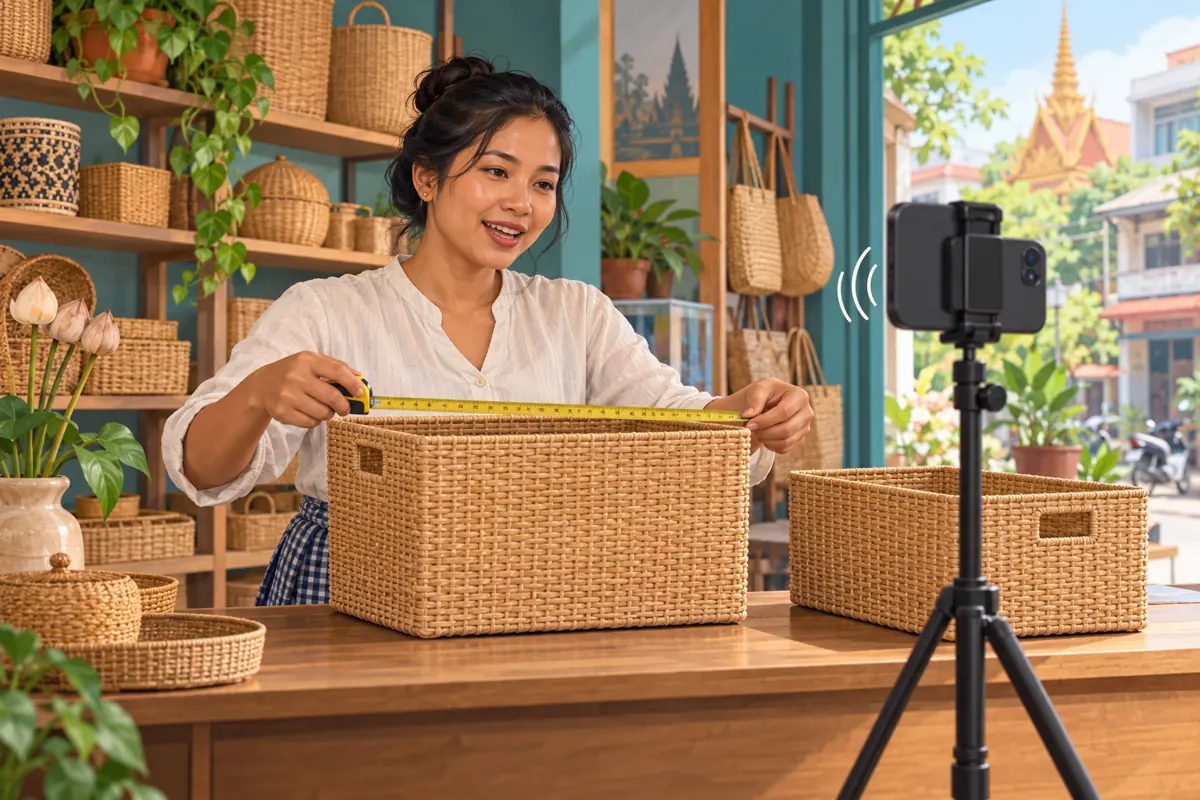
A basket can look perfect in a short video while leaving buyers unsure whether it fits their shelf. Adding a spoken size helps only when the voice identifies the correct basket, names the measurement, and says the unit clearly. For Cambodian homeware businesses, pronunciation and language choice deserve as much attention as the product shot. This workflow explains how to prepare a TikTok text-to-speech test, decide when a human recording works better, and turn the finished demonstration into a useful enquiry prompt. It also gives SMM-panel customers a clear boundary: engagement counts cannot establish whether anyone understood the dimensions or intends to buy.
1. Start with the fit question
Choose one customer decision before writing the narration. A buyer fitting a basket into a cabinet needs its outside dimensions, including anything that protrudes. Someone storing document folders needs usable inside space. Those are different questions, even when the video shows the same product. Write the intended question at the top of the production note so the person filming and the person checking the voice work toward the same answer.
Consider a hypothetical Phnom Penh shop selling rectangular woven baskets. Customers keep asking whether the larger model fits beneath a bedroom shelf. Its next video should show that model, the relevant measurement, and how to check the shelf opening. Avoid filling the opening narration with colours, delivery arrangements, and every available size. Those details can follow once the viewer understands which basket is being measured. This is an editorial example, not a claim about an actual shop or campaign.
2. Establish what text-to-speech can contribute
TikTok describes text-to-speech as a feature that converts text into voice in its official article, How we're making TikTok more accessible for everyone. That is the useful starting point: the tool reads supplied wording. It does not inspect a basket, verify measurements, or decide whether a statement is clear. The shop remains responsible for every product claim in the resulting audio.
Before preparing the entire demonstration, test a short sentence using the text-to-speech control if it is available in your editor. Listen on the actual device and account used for production. This article does not assume that a particular Khmer voice or language option is available. If the available voice cannot communicate the intended wording clearly, record a fluent speaker instead. Keep readable product information on screen whichever audio method you choose, so a viewer watching without sound can still understand the central point.
3. Measure the exact item before writing
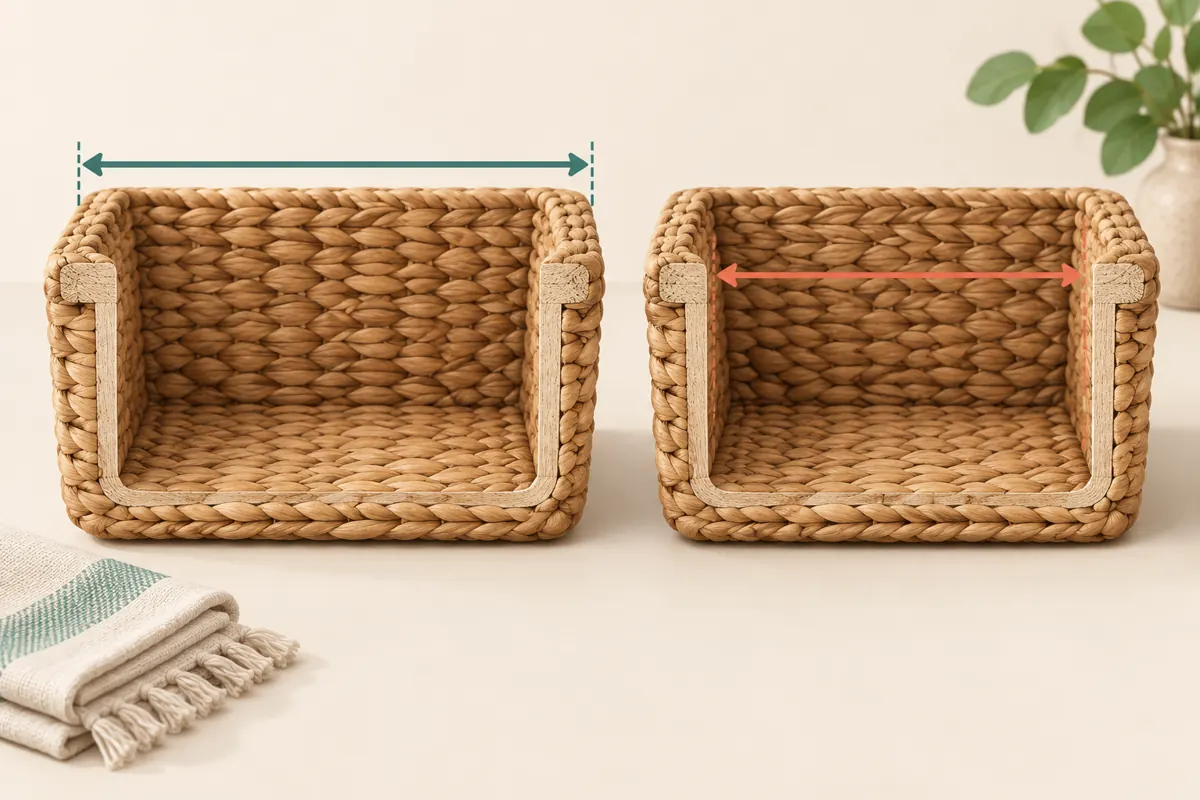
Put the featured basket on a flat surface and check it against the product record. Measure the outside width at the widest relevant point, then depth and height where the fit question requires them. Check whether handles, a lid, or a flared rim extend beyond the main body. If showing internal capacity, take separate inside measurements. Do not use an interior measurement to promise that the whole basket will fit a shelf opening.
For a hypothetical script, suppose the sample has an outside width of thirty centimetres. That number is illustrative and must be replaced with a verified measurement before use. A useful production note would identify the sample and state whether the measurement includes its rim. For handmade stock, check whether other available pieces differ before presenting one sample's dimensions as universal. If variation matters, explain it plainly and offer to measure the specific piece being considered.
4. Write sentences that work when spoken
A compact product label can be awkward narration. A string such as 30 × 22 × 18 cm requires the listener to infer the order of dimensions and interpret symbols. Draft spoken sentences instead: identify the basket, name one dimension, and say its unit. For the hypothetical sample, an English working line could be: “This basket measures thirty centimetres across the outside rim.” Have the customer-facing version written and checked in the audience's language.
Keep model identification separate from measurement if combining them becomes confusing. An internal stock code may be useful to staff but difficult for customers to recognise by ear. Show that code legibly where needed and use a familiar descriptive name in the narration. Avoid adding phonetic misspellings to visible product text merely to force a voice to pronounce it differently. If accurate text repeatedly produces unclear speech, changing the recording method is usually the cleaner editorial choice.
5. Review Khmer meaning and pronunciation independently
For a Khmer-speaking audience, assign a fluent reviewer who did not write the first draft. Ask them to check the product term, the dimension being described, the number, and the unit. A sentence can sound smooth while naming the wrong measurement. Borrowed product names and abbreviated units deserve particular attention because staff familiarity can hide ambiguity that a new customer would notice.
Run a listening check without showing the script. Ask the reviewer to explain which basket was described, what was measured, and what they would measure at home. Record misunderstandings in ordinary language, such as “heard inside width instead of outside width.” Correct the wording or audio, then replay the complete sentence. Do not approve a narration simply because the voice sounds polished. If a human recording is clearer, use it and apply the same factual checks to that recording.
6. Match each spoken fact to the shot
Film the measurement from an angle that makes its endpoints understandable. When the narration mentions the outside rim, show the tape crossing that rim. When explaining usable interior space, show the inside separately. Avoid switching to another basket halfway through a measurement sentence. A visually attractive cut can accidentally make a correct spoken number appear to describe a different model.
Build the sequence around three simple moments: identify the product, demonstrate the relevant measurement, and explain the buyer's next step. Preview the assembled video with sound, then without sound. Check that text remains visible long enough to read and does not cover the tape endpoints. If the narration runs past the matching shot, shorten the sentence or extend the shot. Do not squeeze a necessary distinction into rushed speech just to preserve a particular editing rhythm.
7. Make the next enquiry specific
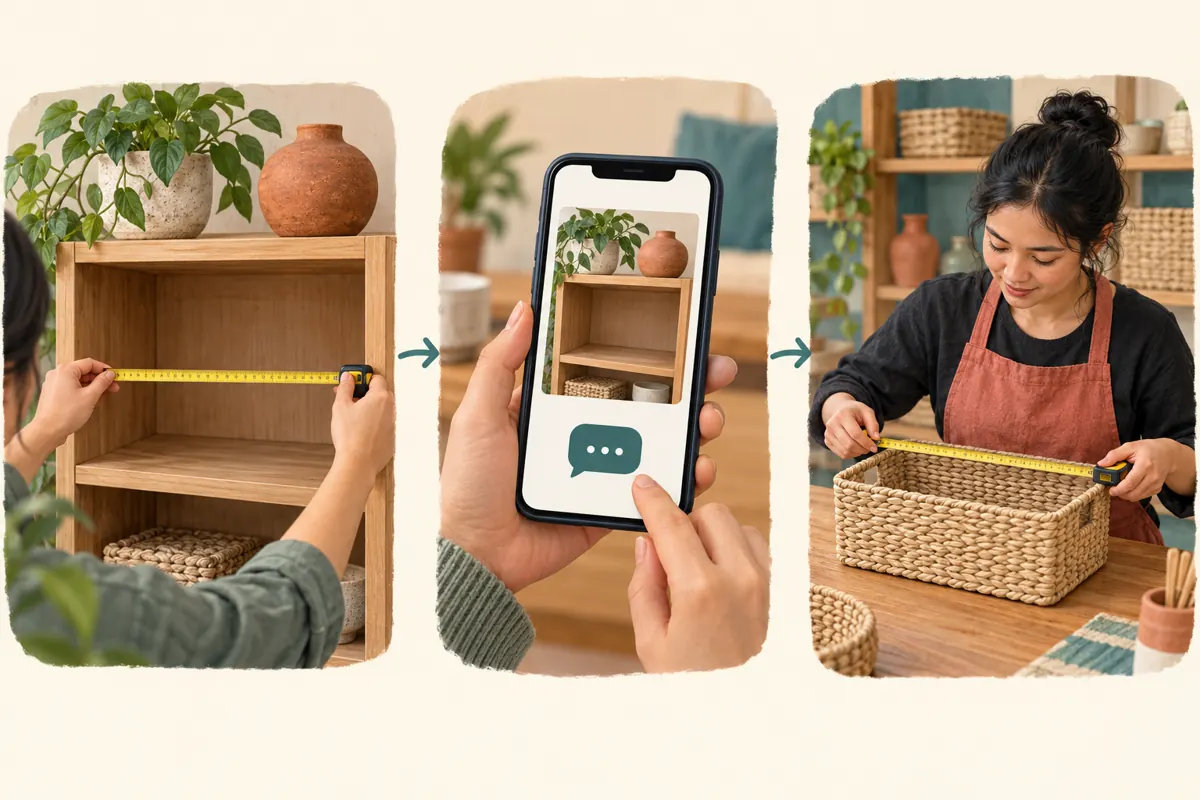
Close with an action that helps staff assess fit. For the hypothetical shelf example, ask buyers to provide the opening's width, depth, and clear height through the shop's stated contact route. A photo of the empty shelf can clarify an obstruction, but it should accompany measurements rather than replace them. Avoid asking customers to include people, addresses, or unrelated household details in that image.
Prepare the reply before promoting the video. Staff should identify the basket model, confirm which measurements the buyer supplied, and check any missing clearance information. A shelf opening may be wide enough while a door hinge blocks insertion. Treat the first message as an enquiry until the relevant details are checked. Keep stock availability, delivery arrangements, and order confirmation explicit in the subsequent conversation rather than implying that watching the demonstration reserves an item.

8. Apply a policy check before any panel decision
The supplied jkj-smm.com catalogue includes the exact service title “TikTok Video Save ~ Max Unlimited ~ 10M/days ~ Instant ~ 𝐍𝐎 𝗥𝗘𝗙𝗜𝗟𝗟”. Its title identifies it as a video-save offering, but the supplied description is empty. The title alone does not substantiate its speed or capacity wording, establish audience origin, or show how activity is generated. It also supplies no basis for an official TikTok affiliation claim.
TikTok's official article How TikTok counters deceptive behaviour says it prohibits fake engagement, including services that artificially increase engagement. Apply that policy boundary before considering an order; do not proceed with artificial engagement. Purchased saves are not evidence of genuine interest, sales, ad delivery, or Cambodian viewers. For this basket demonstration, use the budget first to resolve unclear audio, inaccurate measurements, or missing customer instructions. A panel entry cannot repair those problems, and its presence in a catalogue does not establish platform permission.
9. Evaluate understanding through actual questions
After publication, keep a small record of genuine enquiries connected to the video where that connection is known. Note the basket discussed, whether the buyer understood the measurement, and which clarification staff supplied. Ask customers which video they mean when the reference is unclear. Do not attribute every new enquiry to the latest post merely because it appeared recently.
Useful observations include buyers sending the requested shelf dimensions or repeatedly asking whether the stated width includes the handles. The second pattern suggests a content gap worth fixing. Neither observation alone proves that the narration increased sales. Keep confirmed purchases separate from enquiries and avoid treating a save count as a count of prospective customers. For the next demonstration, change one confusing element at a time so the team can describe what it improved without inventing a performance explanation.
10. Fix the common failures before wider promotion
Common mistakes include speaking a measurement without its unit, showing one size while naming another, and leaving an old voice track beneath revised text. Review the final assembled version after every factual edit. A correct script in a notebook is insufficient if the published audio still contains the previous number. Keep a short approval record identifying the featured sample, checked wording, and person who reviewed it.
Another mistake is adding music that makes a crucial word harder to hear. Listen through an ordinary phone speaker at a comfortable volume, as well as any headphones used during editing. Finally, avoid replacing clear Khmer wording with unfamiliar English just because an available synthetic voice handles English more smoothly. Choose the recording method around customer understanding. Release the video when the item, measurement, spoken explanation, and enquiry instructions agree; revisit it if stock specifications or the featured model change.
Frequently asked questions
Should a Cambodian shop use an English voice if Khmer pronunciation is unclear?
Only if English suits the intended audience. A convenient voice is not a reason to change the customer's language. For Khmer-speaking buyers, a clear recording by a fluent speaker may be more useful. Keep the same measurement checks, on-screen information, and listening review regardless of who or what produces the voice.
Can we narrate only the width to keep the video short?
Yes, if the video clearly answers a width question and does not imply that width alone guarantees fit. Explain that buyers should also check depth, height, and any obstruction where relevant. A focused demonstration can be brief while still identifying what remains to be confirmed before an order.
Does text-to-speech replace captions?
No. Spoken wording and readable wording serve different viewing situations. A buyer may watch silently or need text to confirm an unfamiliar product term. Keep essential dimensions visible and review any captions against the finished audio. Neither a voice track nor captions excuse an incorrect measurement.
Would a higher save count show that the spoken explanation worked?
It would not establish comprehension. A save does not explain why someone saved a video, and purchased activity cannot demonstrate genuine buyer interest. Look for relevant evidence in actual questions: whether customers identify the right model, understand the dimension, and provide the information needed for a fit assessment.
What should staff do if the wrong number reaches the published video?
Pause further promotion and correct the customer-facing information using the options available for that post. If replacement is necessary, check the new video completely before sharing its link. Contact anyone whose active enquiry relied on the incorrect measurement, explain the correction, and reconfirm fit before treating their order as settled.
Explore the current service catalogue, create an account, or ask a specific question through support tickets.
- TikTok Newsroom: How we're making TikTok more accessible for everyone
- TikTok Newsroom: How TikTok counters deceptive behaviour
Prepared with AI assistance. Illustrations explain the workflow and do not represent customer results.