20/10/2026 18:00
Where Did They Explain the Zipper End? YouTube Transcripts for Cambodian Sewing Shops
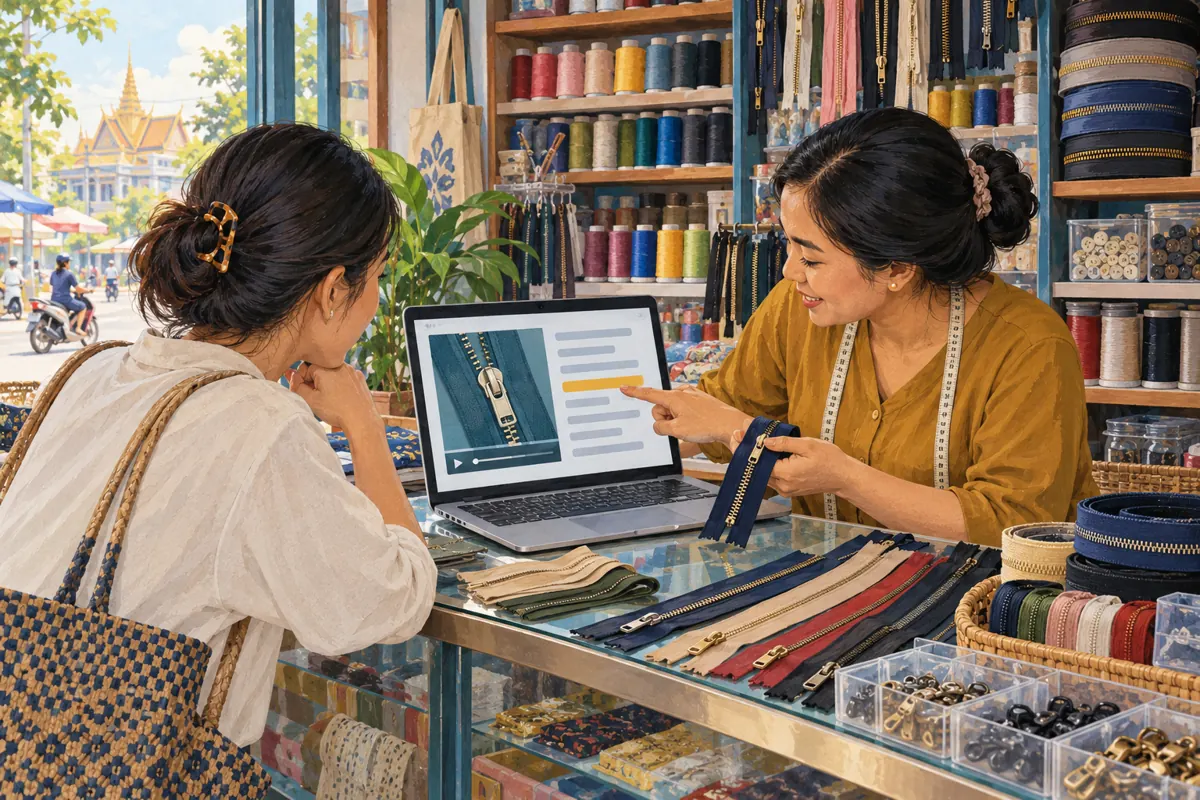
A customer remembers a zipper demonstration but cannot find the moment that explains whether the two sides separate completely. Replaying the whole video interrupts their work, while asking for “the blue zipper” leaves the seller guessing. For a Cambodian sewing-supply business, a usable YouTube transcript can provide a route back to the relevant explanation. This guide shows how to prepare that route, test it with a realistic customer question and connect it to an accurate enquiry. It also explains what an SMM-panel service cannot establish about the usefulness of the demonstration or the people watching it.
1. Start with a detail customers need to recover
Choose a video in which finding a particular spoken explanation would help someone make a better enquiry. A comparison of several zipper samples is a useful candidate: viewers may remember the colour but forget the product name or the explanation of the bottom end. The task is to recover that explanation without guessing which sample the presenter meant.
In a hypothetical Phnom Penh notions shop, a tailor watches a demonstration while planning a cloth bag. Later, she wants to check which sample stays joined at the bottom. The shop's practical goal is that she can locate the relevant passage, watch the action and identify the sample in her message. That is a more useful objective than simply making the video appear popular. It also gives the owner a concrete test before spending time or money promoting the guide.
2. Understand what the transcript can do
YouTube's official transcript guide says that videos with captions have a full transcript. Viewers can open the video description, select Show transcript and select a caption line to jump to that part of the video. The text also follows playback. These documented functions make the transcript useful as a navigation aid. The supporting source is YouTube Help's “View video transcripts,” listed below.
A transcript cannot describe a detail that the presenter never explains. If the speaker says only “this one” while holding several similar samples, the text may be accurate yet unhelpful. Nor should the shop promise that everyone will see an identical screen layout. Test the actual published video on the devices customers use, and describe the action they need to take rather than relying on the position of a particular button.
3. Make the spoken explanation identifiable
Before recording a new guide, give each sample a short, stable identifier. Use the same identifier on the sample card, in the spoken demonstration and in the shop's enquiry notes. Introduce the item again when moving to a different feature. A viewer entering halfway through should be able to tell what is being discussed without reconstructing the entire presentation.
For example, a hypothetical script might say, “Sample B is the navy zipper. Watch its bottom end as I open it.” The presenter then shows the action clearly and explains what happened. Avoid turning every sentence into a list of keywords. Natural repetition at the moment of comparison is enough. For an existing recording with vague speech, assess whether the surrounding footage resolves the ambiguity. If it does not, a clearer replacement demonstration may be more useful than polishing the transcript.
4. Prepare captions that preserve the explanation
YouTube's official caption instructions describe adding a language and a subtitle track through the Subtitles area of YouTube Studio. They also describe uploading supported caption files, including files with timing information. A shop can use an appropriately prepared caption file rather than assuming automatic processing will produce a reliable Khmer track. Check the options actually available for the selected video and language.
Assign someone who understands both the spoken language and the products to review the track. Concentrate on sample identifiers, measurements, negatives and words that distinguish one item from another. “Does separate” and “does not separate” lead to different decisions. Preserve what the recording actually says; do not silently rewrite an incorrect spoken claim into an apparently correct transcript. Resolve the underlying content error before directing customers to it. Keep an approved copy of the caption file with the video reference so later revisions have a clear starting point.
5. Review Khmer and borrowed product terms together
A Cambodian seller may explain a product in Khmer while using an English catalogue term or an alphanumeric sample code. Build a small working glossary before reviewing the captions. Record the spoken term, the spelling the shop will use and the physical sample it describes. Ask a colleague whether customers use a different everyday expression for the same feature.
Keep this glossary as an editorial aid rather than inserting every alternative into the transcript. Captions should represent the speech, while a separate written explanation can clarify unfamiliar terminology. If the spoken name and the label on the packaging differ, explain the relationship in the demonstration. Do not assume that a translated term proves compatibility with a customer's existing zipper. Matching a replacement can require further product information, and the enquiry should leave room for that check.
6. Test the journey from a line to the right sample
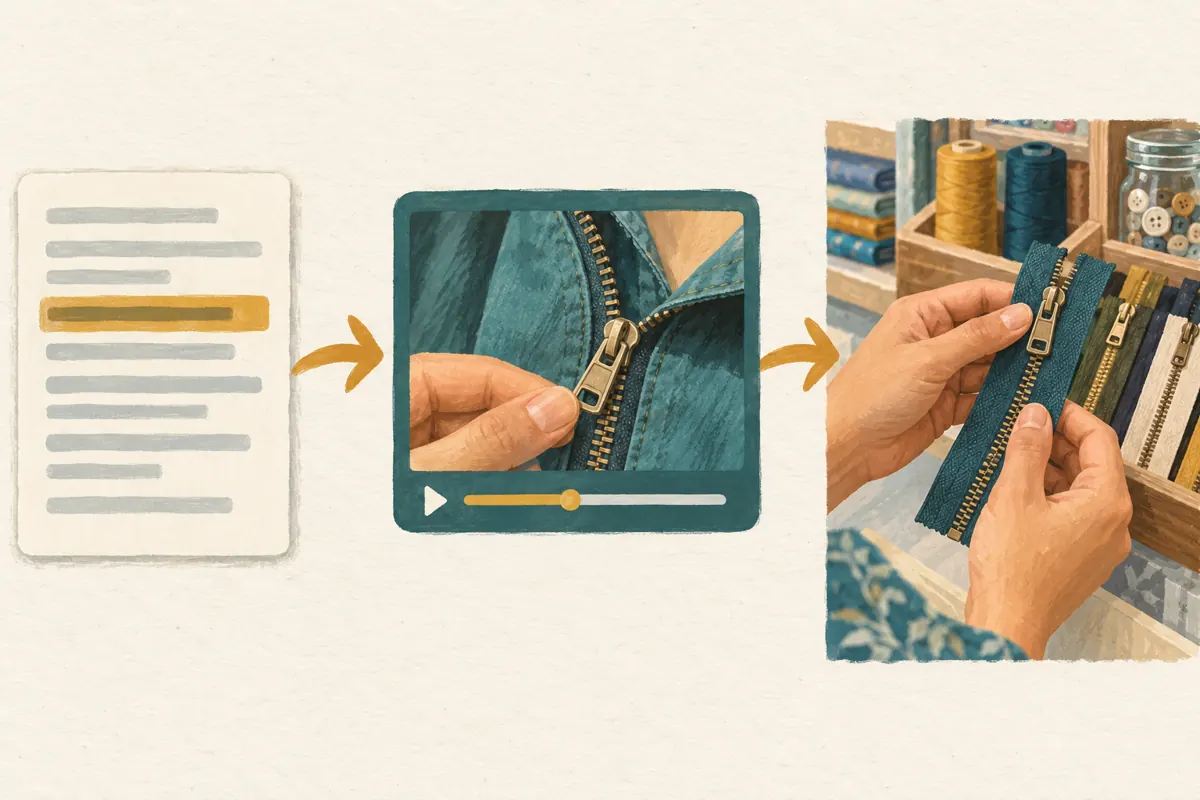
Open the published video as a viewer would. Find the passage about the bottom end, select the relevant transcript line and watch what follows. Check whether the viewer sees the intended sample at that moment. A correctly spelled line can still be poorly timed, sending someone to the previous item or to an unhelpful transition.
Then run a small usability exercise with a colleague who did not prepare the captions. Give them a task such as, “Find the sample whose sides separate completely, then tell me its identifier.” Avoid pointing at the answer. Observe whether they can open the transcript, locate the passage and connect the words to the object. Record the obstacle in plain language: “The sample changed before the explanation finished” is actionable. “The video needs more engagement” does not identify what needs fixing.
7. Give customers a simple route when the transcript is unavailable
Do not make the transcript the only way to understand the product. Put a short, accurate sample summary in the description or another customer-facing reference. Explain the key distinction in ordinary language and indicate where customers can ask a question. This helps someone who cannot find the transcript control or prefers a brief written explanation.
If a customer reports a missing transcript, first ask which video they opened and what device they are using. Check that exact video rather than assuming they selected the latest upload. Confirm that its caption track is present and published. Until the issue is resolved, provide the relevant explanation directly. Never tell someone to order a product solely because they found a matching word in the transcript; the word is a route to the demonstration, not a substitute for checking the item.
8. Turn the recovered detail into a precise enquiry
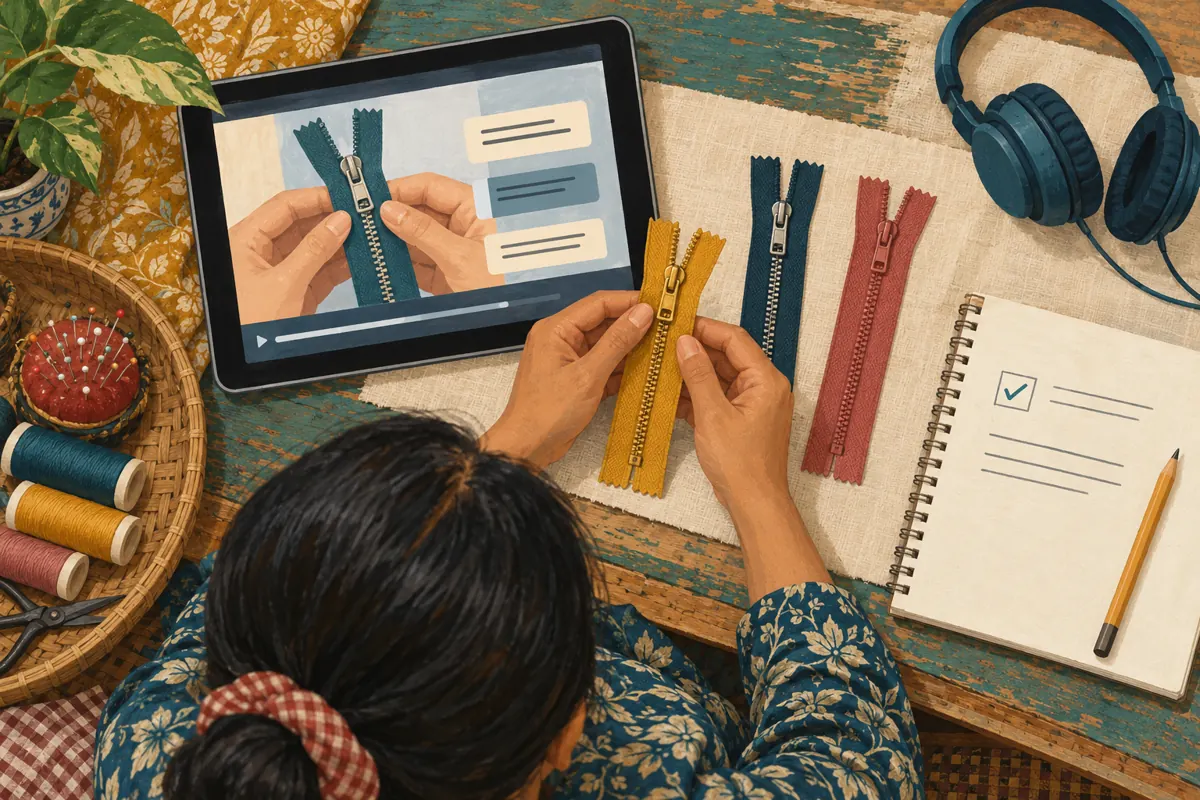
Finish the guide with a request that helps staff respond. Ask customers to mention the sample identifier, intended use, required length and quantity. When a photo would help clarify an existing item, explain what part needs to be visible. Keep delivery addresses and other personal details out of public comments by directing those details to the shop's chosen private contact route.
In the hypothetical tailor's enquiry, “I mean Sample B from the bottom-end explanation; I need it for a cloth bag” gives the seller a useful starting point. Staff should still confirm the exact product and current availability. A demonstration is not a live inventory record. The seller can answer with a current sample photo or a clarification question, then record the agreed item before discussing fulfilment. This connects educational promotion to a careful sales conversation without treating a video view as an order.
9. Apply a separate decision process to SMM-panel services
The supplied public catalogue includes “YouTube - Views ~ Native Social Ads ~ Min 1M ~ 100k/day ~ 0-3hrs ~ 𝗥𝗘𝗙𝗜𝗟𝗟 30D”. Its title presents it as a views service, but the brief supplies no description. The wording alone does not verify its delivery method, advertising placement, audience location or relationship with YouTube. Treat the quantities and other claims in that title as unverified catalogue wording, not evidence for a campaign plan.
YouTube's fake engagement policy prohibits artificial increases in engagement metrics and warns that a hired promoter's actions can affect the channel. Review the actual method against that policy before considering any service; decline methods that artificially inflate metrics. Purchased engagement is not evidence of genuine interest, sales, ad delivery or Cambodian users. It also cannot establish that viewers found the correct zipper passage. For this workflow, prioritise accurate captions, a usable demonstration and distribution to people who have a relevant question.
10. Evaluate usefulness and maintain the guide
After sharing the guide, review the questions that arrive. Look for specific problems: customers naming the wrong sample, quoting an ambiguous phrase or asking about a feature the video never shows. Note whether the customer volunteered that they used the transcript; do not infer transcript use from a view count. These observations can guide editing without becoming unsupported claims about conversion or audience behaviour.
Common mistakes include promoting the guide before checking its captions, adding sales language that was never spoken and leaving outdated product references unexplained. Assign one person to review the guide when the sample range changes. If the demonstration remains useful but an item is unavailable, make the current position clear wherever the guide directs enquiries. If the explanation itself is wrong, correct the content before continuing promotion. Keep a dated note of what changed so staff know which version customers may have seen.

Frequently asked questions
Is a transcript different from subtitles displayed over the video?
They use caption text in different viewing arrangements. On-screen captions accompany playback, while the transcript presents the text as a navigable reference. For this shop workflow, the useful distinction is practical: a customer can locate a passage and select its line, then watch the product detail in context.
Should the shop provide an English transcript for a Khmer demonstration?
Choose languages according to the people the guide is intended to help. Start by making the original-language track accurate. If an English subtitle track would help a real audience, have someone competent review product terms and meaning. Do not replace a clear Khmer explanation with English merely because the surrounding promotional article is written in English.
Can the captions include a new price or stock update?
Do not insert a new commercial statement as though the presenter said it. Keep captions faithful to the recording. Put current stock or price information in an appropriate current reference and confirm it during the enquiry. If the video makes an outdated offer central to the demonstration, review whether it should still be promoted.
What if customers still ask the question answered in the guide?
Answer it courteously, then examine where the guide failed to help. The terminology may be unfamiliar, the sample may be unclear or the customer may need reassurance about a different use case. Repeated questions are useful editorial evidence. They do not automatically mean the customer ignored the content.
Will adding a transcript make an SMM views service worthwhile?
A transcript improves the information available to a viewer; it does not validate a service's delivery method or commercial value. Decide whether the content solves a real customer problem first. Assess any promotion separately for policy compliance, documented methods and appropriate objectives. A larger counter cannot demonstrate that anyone understood the zipper comparison.
Explore the current service catalogue, create an account, or ask a specific question through support tickets.
- YouTube Help: View video transcripts
- YouTube Help: Add subtitles & captions
- YouTube Help: Fake engagement policy
Prepared with AI assistance. Illustrations explain the workflow and do not represent customer results.